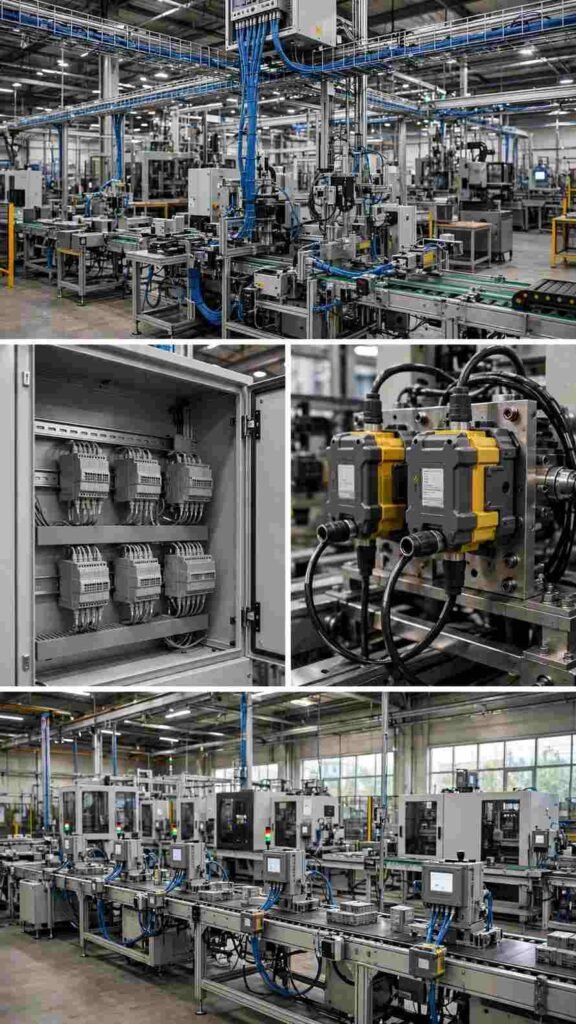
TURCK Fieldbus Technology & I/O Systems
TURK - Fieldbus Technology
Fieldbus Technology
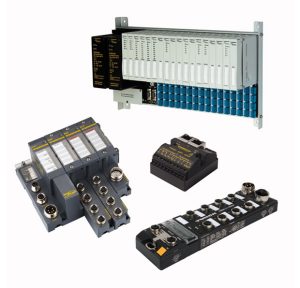
- The fieldbus product portfolio includes I/O modules and I/O systems for applications in the Ex and non-Ex area. The modules and systems are available in protection class IP67 for installation in the field as well as in protection class IP20 for cabinet mounting. You have the choice between PROFIBUS-DP, PROFIBUS-PA, Foundation fieldbus, DeviceNet, CANopen and Modbus RTU/ASCII as well as the Ethernet protocols PROFINET, Ethernet/IP, Modbus TCP and EtherCAT.
Fieldbus Technology - I/O Systems
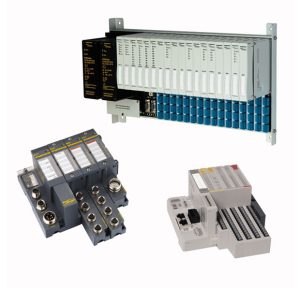
- Our modular fieldbus and remote I/O-systems offer a comprehensive range of solutions for factory and process automation with interfaces for the fieldbus protocols PROFIBUS-DP, DeviceNet, CANopen, Modbus TCP, Ethernet/IP and PROFINET. Excom is a remote-I/O-system in IP20 for Ex and non-Ex areas. You can plan and implement tailor-made solutions for the I/O IP20 area with the universal BL20 bus terminal system. The modular IP67 fieldbus systems BL67 and piconet can be mounted directly in the field.
Fieldbus Technology - I/O Modules
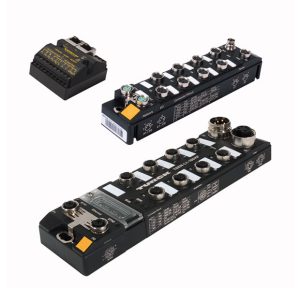
- For factory automation we offer compact fieldbus I/O-modules for PROFIBUS-DP, DeviceNet, CANopen, INTERBUS, AS-interface, Modbus TCP, Ethernet/IP and PROFINET. The IP67-modules for use in harsh environments have glass-fiber reinforced plastic housings and metal-connectors, are fully potted, vibration and shock-proof. The IP20-modules for DIN rails can not only be installed in control cabinets, they can also be used to integrate small, decentralized control boxes with a few I/O-signals to a fieldbus network.
Fieldbus Technology - PA Bus Components
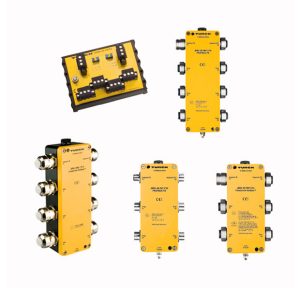
- We offer the full range of solutions for process automation tasks implemented with FOUNDATION fieldbus and PROFIBUS-PA: The portfolio includes power supplies, power conditioners, multibarriers as well as junction boxes in IP20 and IP67. The range also includes passive connectivity products such as fieldbus cables, field distributors and terminating resistors. The components are suitable for use in harsh environments and can directly be mounted on the machine or in the process.
Fieldbus Technology - Accessories
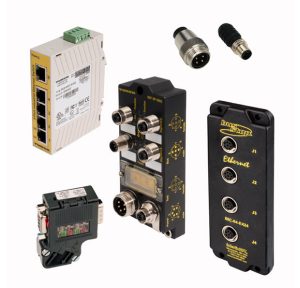
- We offer the full range of components needed to build a complete fieldbus network, such as fieldbus cables, repeaters and many accessories. This includes bus and supply cables, passive and active junction boxes, power supplies, cabinet receptacles and receptacles. Field-wireable connectors and terminating resistors round off the product line.
TURCK Fieldbus Technology & I/O Systems
TURCK Fieldbus Technology provides industrial communication solutions, including I/O systems, I/O modules and remote I/O for connecting field devices with PLCs and automation controllers. Depending on the product, supported protocols include PROFINET, PROFIBUS, Modbus TCP, EtherNet/IP, EtherCAT and CANopen.
Available in IP20 cabinet-mounted and IP67 field-mounted configurations, these solutions support factory, machine and process automation. Explore TURCK industrial automation products available through Orchid Technology.
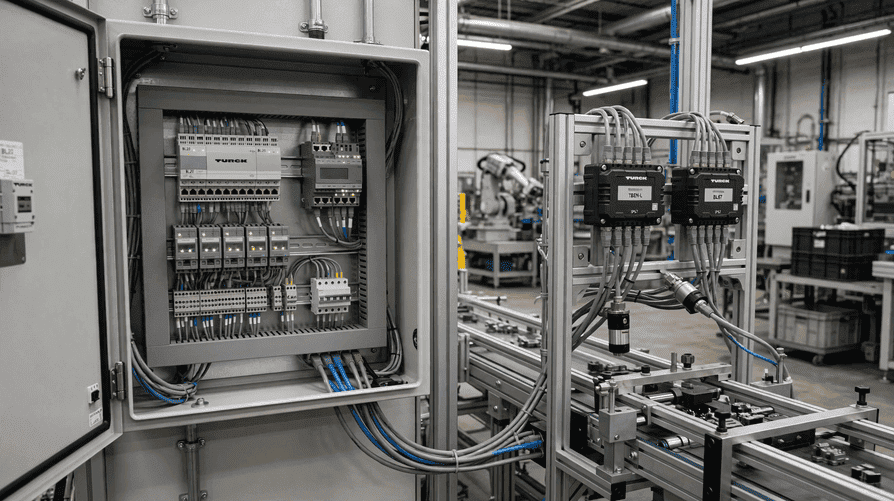
TURCK Industrial Fieldbus Solutions
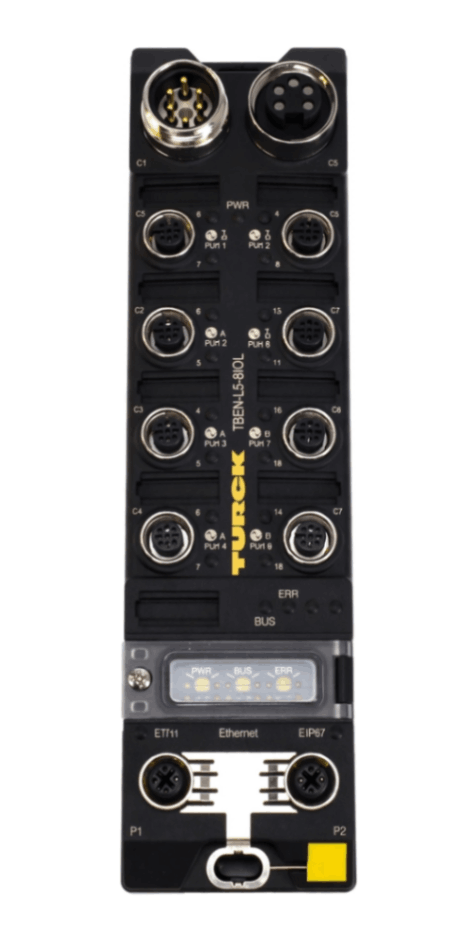
1. TURCK Fieldbus Technology & I/O Systems
TURCK Fieldbus Technology provides industrial communication and I/O solutions that connect field devices with automation controllers and industrial networks. The portfolio includes TURCK I/O systems, TURCK I/O modules, remote I/O and fieldbus components for distributed machine and process automation applications.
TURCK Fieldbus solutions support the exchange of signals and data between field-level devices and automation controllers. Depending on the selected system, I/O modules can be installed inside control cabinets or closer to machines and field devices for decentralised automation architectures.
These solutions are used across factory automation, machine automation, production lines and process automation, where communication between sensors, actuators, I/O systems and controllers is required.
For an overview of the complete product portfolio, explore our TURCK industrial automation products.
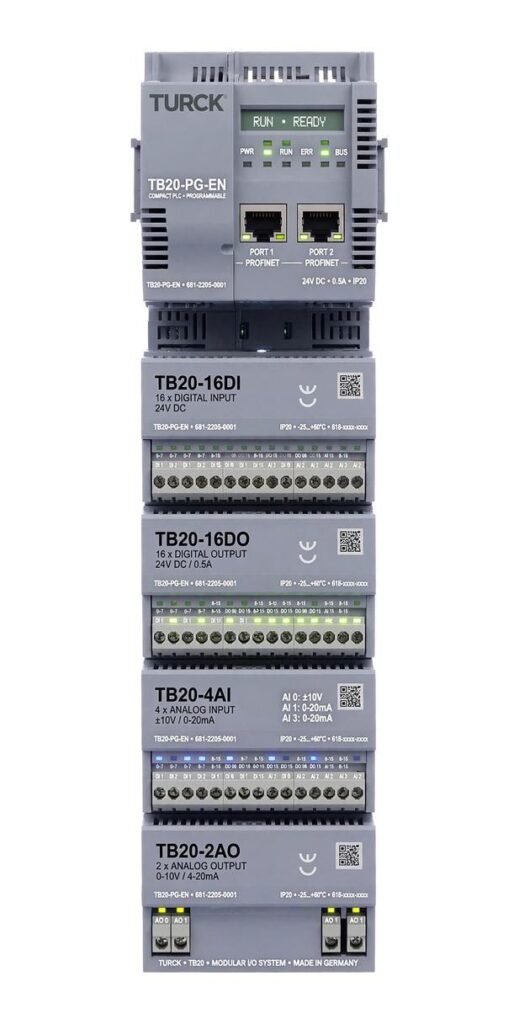
2. TURCK I/O Systems
TURCK I/O systems provide an interface between field devices and automation controllers. They collect input signals from connected devices and transmit the information through the selected industrial communication network.
Depending on the system and application requirements, TURCK I/O solutions are available for different installation environments and automation architectures.
Typical applications include:
- Machine automation
- Factory automation
- Production lines
- Distributed I/O architectures
- Process automation
- Control cabinet installations
- Field-level automation
TURCK I/O systems can be configured according to the required number and type of I/O points, communication protocol and installation environment.
These systems form part of a broader automation architecture. Explore the complete range of TURCK industrial automation products for additional solutions.
3. TURCK I/O Modules
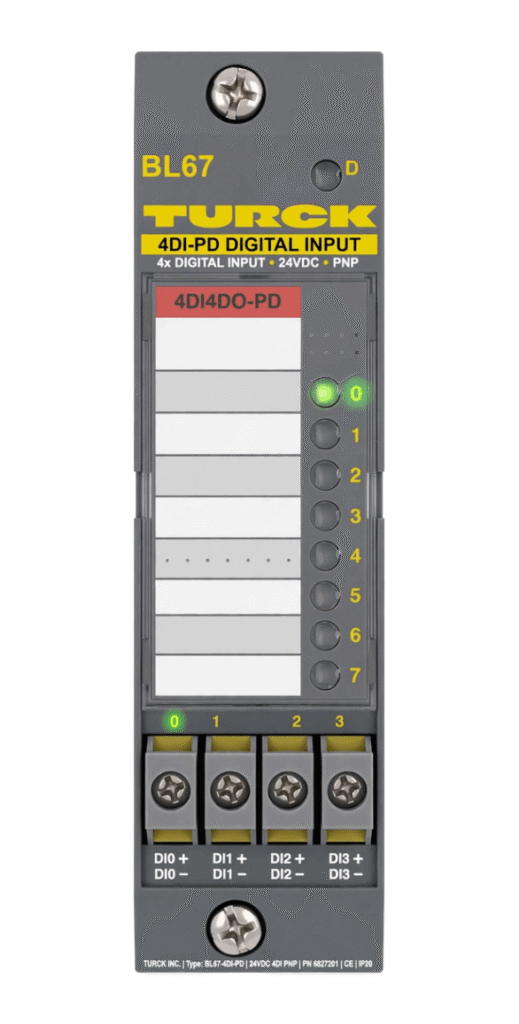
TURCK I/O modules connect sensors, switches, actuators and other field devices with industrial control systems. They provide the interface between field-level signals and the automation controller.
Depending on the selected product, TURCK industrial I/O modules can support different digital and analogue signal requirements and form part of modular, remote or decentralised I/O architectures.
TURCK fieldbus modules are used in applications where automation systems require distributed signal acquisition, machine-level I/O or process-level communication.
For applications involving signal isolation, conditioning and interface technology, explore our TURCK Interface Technology solutions
.
4. TURCK Remote I/O & Decentralised I/O Systems
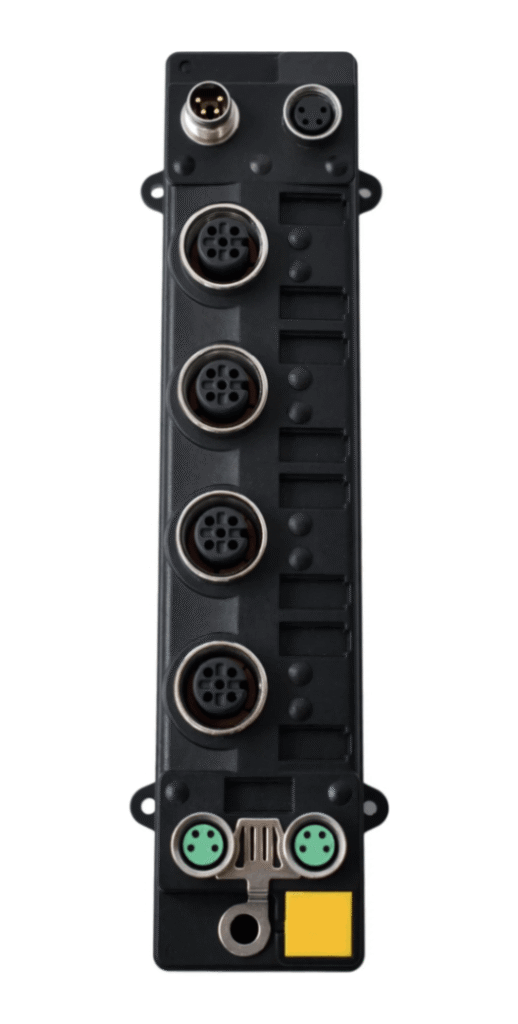
TURCK Remote I/O places I/O modules closer to field devices instead of routing every individual field signal back to a central control cabinet. The modules collect local signals and communicate with the PLC or controller through an industrial network.
This approach is useful for distributed machines, production lines and process installations where field devices are located across different areas.
Key advantages include:
- Shorter signal wiring between field devices and I/O modules.
- Easier distribution of I/O across machines or production areas.
- Modular expansion of I/O points.
- Reduced need to route individual field signals to a central cabinet.
- Flexible installation for machine-level and field-level automation.
Decentralised I/O requires suitable field-level connections. For connectors, cordsets, junction boxes and other connection components, explore our TURCK Industrial Connectivity Solutions.
5. TURCK PROFIBUS-PA & Process Automation Components
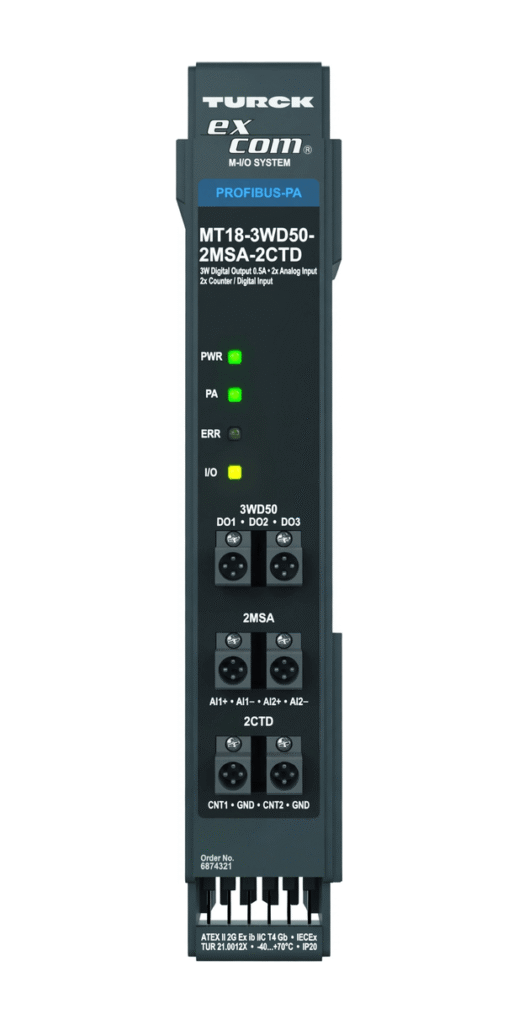
TURCK Fieldbus Technology also includes components for process automation and PROFIBUS-PA applications.
These solutions can support field-level communication and I/O requirements in process automation environments, including applications where Ex-rated or hazardous-area solutions are required and specified by the selected product.
Relevant applications include:
- Process automation
- Field-level signal communication
- PROFIBUS-PA networks
- Distributed I/O
- Suitable hazardous-area applications
The appropriate components depend on the process architecture, communication requirements and environmental classification of the installation.
Process automation installations can require additional signal interface and conditioning solutions. For signal isolation, conditioning and related interface products, explore our Turck Interface Technology.
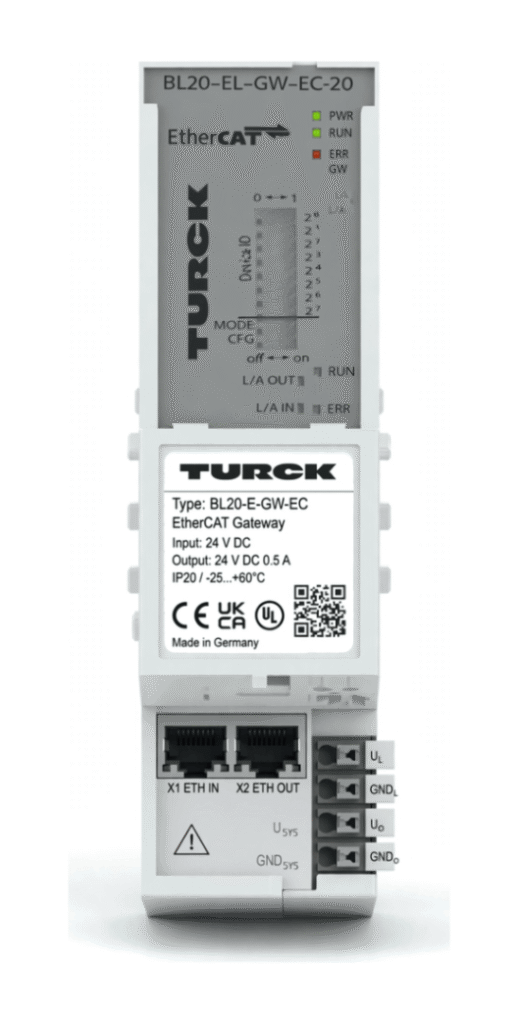
6. TURCK Fieldbus Technology Applications
TURCK Fieldbus Technology can be used where industrial automation systems require communication between field devices, I/O systems and controllers.
Typical application areas include:
- Factory automation
- Machine automation
- Production lines
- Distributed machine architectures
- Process automation
- Control cabinet automation
- Field-level I/O
- Decentralised automation systems
The appropriate I/O architecture and communication protocol depend on the machine design, connected field devices, installation environment and automation controller.
For applications requiring industrial communication between machines, field devices and connected equipment, TURCK Industrial Connectivity Solutions
can complement the I/O architecture.
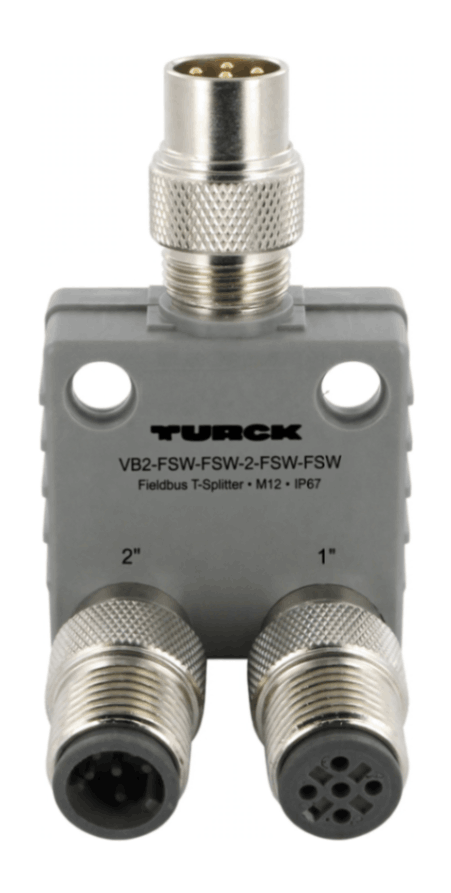
7. TURCK Fieldbus Accessories
TURCK Fieldbus solutions can be supported by accessories and connection components required for fieldbus and I/O installations.
These can include:
- Fieldbus cables
- Connectors
- Distributors
- Junction boxes
- Terminating components
- Field-level connection components
- Power supplies and repeaters
The required accessories depend on the selected I/O system, communication protocol, installation environment and network architecture.
For connectors, cordsets, junction boxes and industrial connection products, explore our TURCK Industrial Connectivity Solutions.
Cabinet-Mounted vs Field-Mounted I/O
TURCK I/O systems can be selected according to where the modules need to be installed.
| I/O Type | Typical Installation | Suitable For |
|---|---|---|
| Cabinet-mounted I/O | Inside a control cabinet | Centralised and protected automation panels |
| Field-mounted I/O | Closer to machines and field devices | Distributed or decentralised automation |
| Modular I/O | Configured with required I/O modules | Systems requiring flexible I/O expansion |
The selection depends on the installation environment, required protection rating, communication protocol and overall automation architecture.
Need Help Choosing the Right TURCK I/O System?
Whether you need TURCK Remote I/O, IP67 I/O modules or IP20 I/O systems, Orchid Technology can help identify suitable products for your application.
Our team also provides guidance on selecting fieldbus communication components based on your industrial automation and installation requirements.
TURCK IP20 and IP67 I/O Systems
TURCK I/O systems are available in different installation formats to support control cabinet and decentralised field applications.
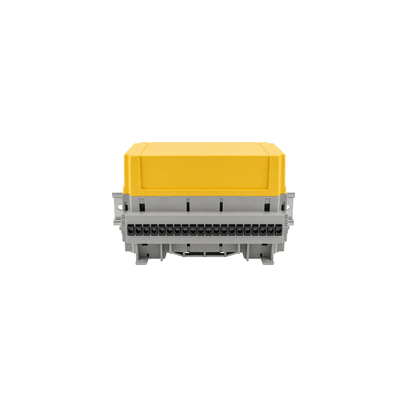
TURCK IP20 I/O Modules
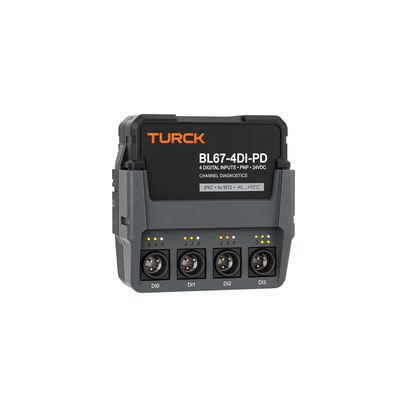
TURCK IP67 I/O Modules
How TURCK I/O Systems Connect the Field to the Controller
The basic architecture is:
Field Devices → TURCK I/O Modules → Fieldbus / Industrial Ethernet → PLC or Controller
For example, sensors can send input signals to a TURCK I/O module. The module communicates this information through a supported network such as PROFINET, PROFIBUS, Modbus TCP or EtherNet/IP, depending on the selected system.
The controller can then process the information and send output commands back through the I/O system to connected actuators and other field devices.
For field devices used to generate these signals, explore our Turck Sensors.
How Does TURCK Remote I/O Work?
01. Field Devices Generate Signals
Sensors and switches detect machine or process conditions and generate input signals.
02. TURCK I/O Modules Collect Signals
Connected I/O modules receive digital and analog signals from field devices.
03. Data Is Transferred to the Controller
The I/O system communicates collected signals to the PLC through a supported fieldbus or industrial Ethernet network.
04. The Controller Processes and Sends Commands
The PLC processes the data and sends output signals through the I/O system to control actuators and other field devices.
TURCK Fieldbus Communication Protocols
TURCK Fieldbus Technology supports I/O and communication solutions designed for different industrial network architectures. Depending on the selected product, supported communication technologies can include:
| Protocol | Application / Role |
|---|---|
| PROFINET | Industrial Ethernet communication and distributed I/O |
| PROFIBUS-DP | Industrial fieldbus communication and I/O |
| PROFIBUS-PA | Process automation communication |
| Modbus TCP | Ethernet-based industrial communication |
| Modbus RTU/ASCII | Serial industrial communication |
| EtherNet/IP | Industrial Ethernet communication |
| EtherCAT | Industrial Ethernet communication |
| CANopen | CAN-based industrial communication |
| DeviceNet | Device-level industrial networking |
| FOUNDATION Fieldbus | Field communication for process automation |
| INTERBUS | Industrial fieldbus communication |
| AS-Interface | Communication with field-level devices |
The availability of each protocol depends on the specific TURCK I/O system or fieldbus product selected for the application.
TURCK Fieldbus Technology Applications
TURCK Fieldbus Technology can be used where industrial automation systems require communication between field devices, I/O systems and controllers.
Typical application areas include:
- Factory automation
- Machine automation
- Production lines
- Process automation
- Control cabinet automation
- Field-level I/O
- Distributed machine architectures
- Decentralised automation systems
The appropriate I/O architecture and communication protocol depend on the machine design, connected field devices, installation environment and automation controller. For applications requiring industrial communication between machines, field devices and connected equipment, TURCK Industrial Connectivity Solutions can complement the I/O architecture.
TURCK Remote I/O vs Centralised I/O
Remote and centralised I/O architectures provide different approaches to connecting field devices with automation controllers.
| Remote / Decentralised I/O | Centralised I/O |
|---|---|
| I/O modules are distributed closer to field devices | I/O modules are concentrated in a central cabinet |
| Suitable for distributed machine architectures | Suitable for centralised control architectures |
| Can reduce individual field signal wiring to the central cabinet | Field signals generally need to be routed towards central I/O |
| Allows I/O to be distributed across different machine areas | Keeps I/O in one primary location |
| Communicates with the controller through an industrial network | Typically connects field signals directly to central I/O |
The choice between centralised and decentralised I/O depends on the overall automation architecture. Explore our TURCK Industrial Automation Products for a broader view of TURCK solutions for industrial applications.
TURCK Fieldbus Technology at a Glance
| Technology / Solution | Main Function | Typical Application |
|---|---|---|
| TURCK Fieldbus | Industrial communication between field devices, I/O and controllers | Factory and machine automation |
| TURCK I/O Systems | Collect and exchange field-level signals. | Distributed and centralised automation |
| TURCK I/O Modules | Interface field devices with control systems | Machine and process I/O |
| TURCK Remote I/O | Distributed signal acquisition | Production lines and distributed machines |
| IP20 I/O | Cabinet-mounted I/O | Control cabinets |
| IP67 I/O | Field-mounted I/O | Decentralised machine automation |
| PROFINET / Industrial Ethernet | Network communication | Industrial automation |
| PROFIBUS / PROFIBUS-PA | Fieldbus communication | Factory and process automation |