Automated Tyre Identification for Manufacturing
Automated Tyre Identification for Manufacturing
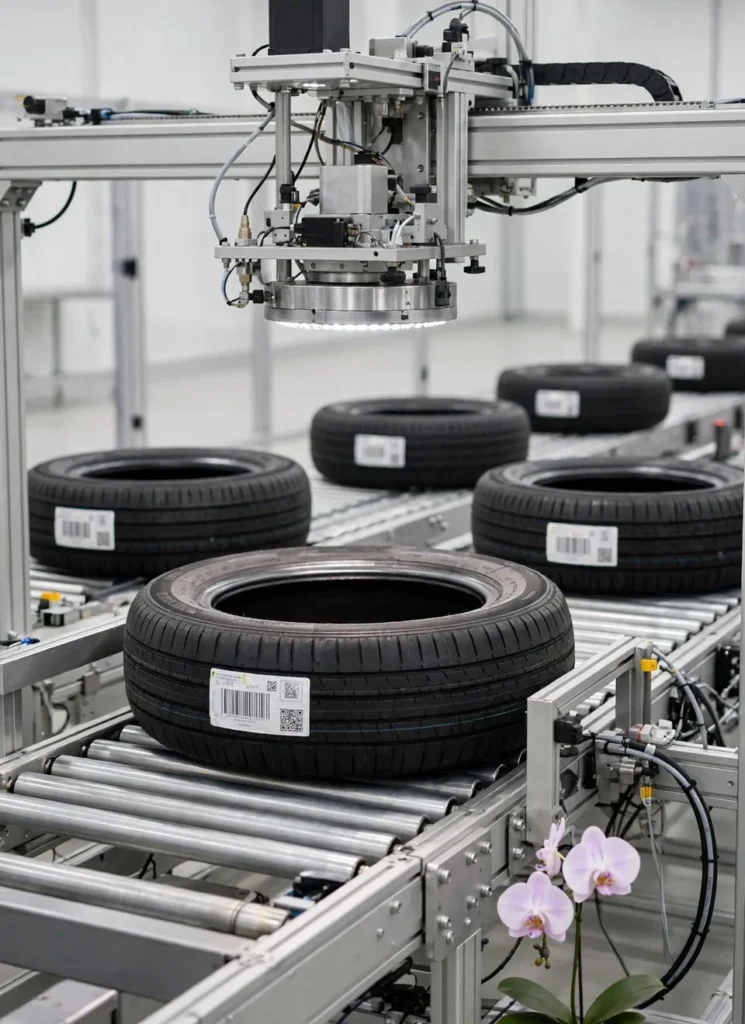
A tyre identification system helps manufacturers identify tyres and verify whether the correct model, size or variant is being processed on a production line. Using industrial cameras and machine vision, the system examines selected visual characteristics and compares them with predefined product specifications.
During tyre manufacturing, different products may share similar features while requiring different production settings or assembly processes. An incorrect tyre entering the next production stage can lead to product mix-ups, rework and quality-control issues. Automated identification helps check product identity at defined inspection points.
Orchid Technology provides machine vision solutions for industrial inspection and verification applications. Depending on the tyre design and production requirements, a vision-based system can be configured to identify selected product features and generate an identification or verification result.
How Does Tyre Identification Work?
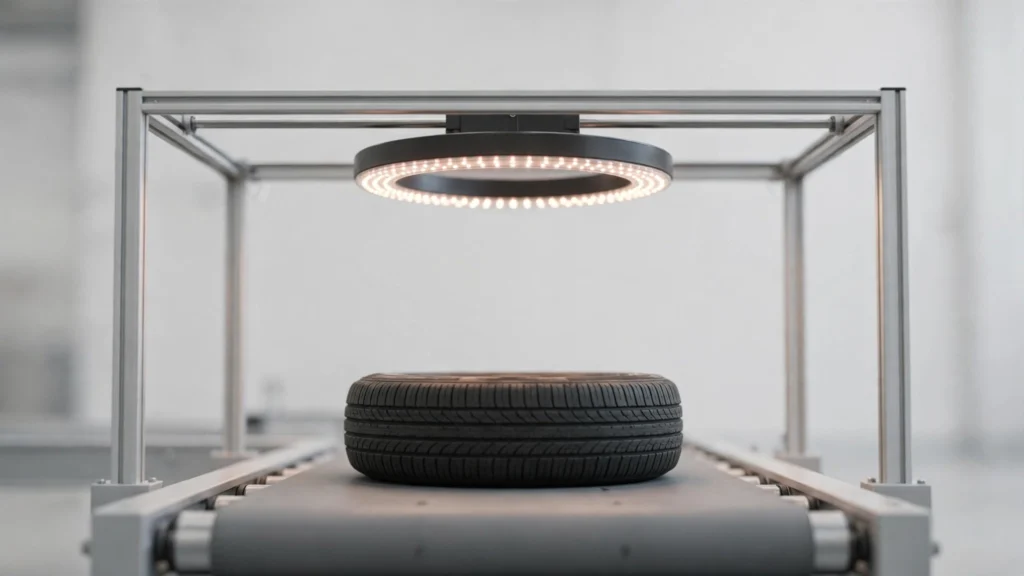
An automated tyre identification process begins when a tyre reaches a designated inspection station. An industrial camera captures images of the relevant tyre features under suitable lighting conditions. These features may include tread patterns, sidewall markings, size information or other visible characteristics selected for identification.
The captured images are processed using configured machine vision algorithms. The system analyses the available features and compares them with reference images or predefined product criteria. Where identification relies on printed or moulded characters, OCR or OCV technology may be used to read or verify the relevant information.
After processing, the system determines whether the inspected tyre matches the expected model, size or variant. Depending on the application, the result can be displayed to an operator or communicated to compatible production equipment. The inspection sequence and decision rules are configured according to the manufacturer’s requirements.
Why Automate Tyre Traceability?
Manual tyre identification can become difficult when several models, sizes or variants move through the same manufacturing facility. Repeated visual checks may also depend on operator attention and the availability of clear product information.
Automated identification provides a repeatable way to check selected tyre characteristics against defined requirements.
- Consistent identification: Apply configured criteria to tyres presented at the inspection station.
- Reduced product mix-ups: Help identify tyres that do not match the expected model or variant.
- Faster verification: Perform identification checks within the production workflow.
- Improved inspection consistency: Reduce dependence on repetitive manual visual comparisons.
- Production control support: Make identification results available to connected equipment where required.
- Variant verification: Check selected differences between tyres manufactured on the same line.
What Does a Tyre Identification System Check?
Tyre Size Identification
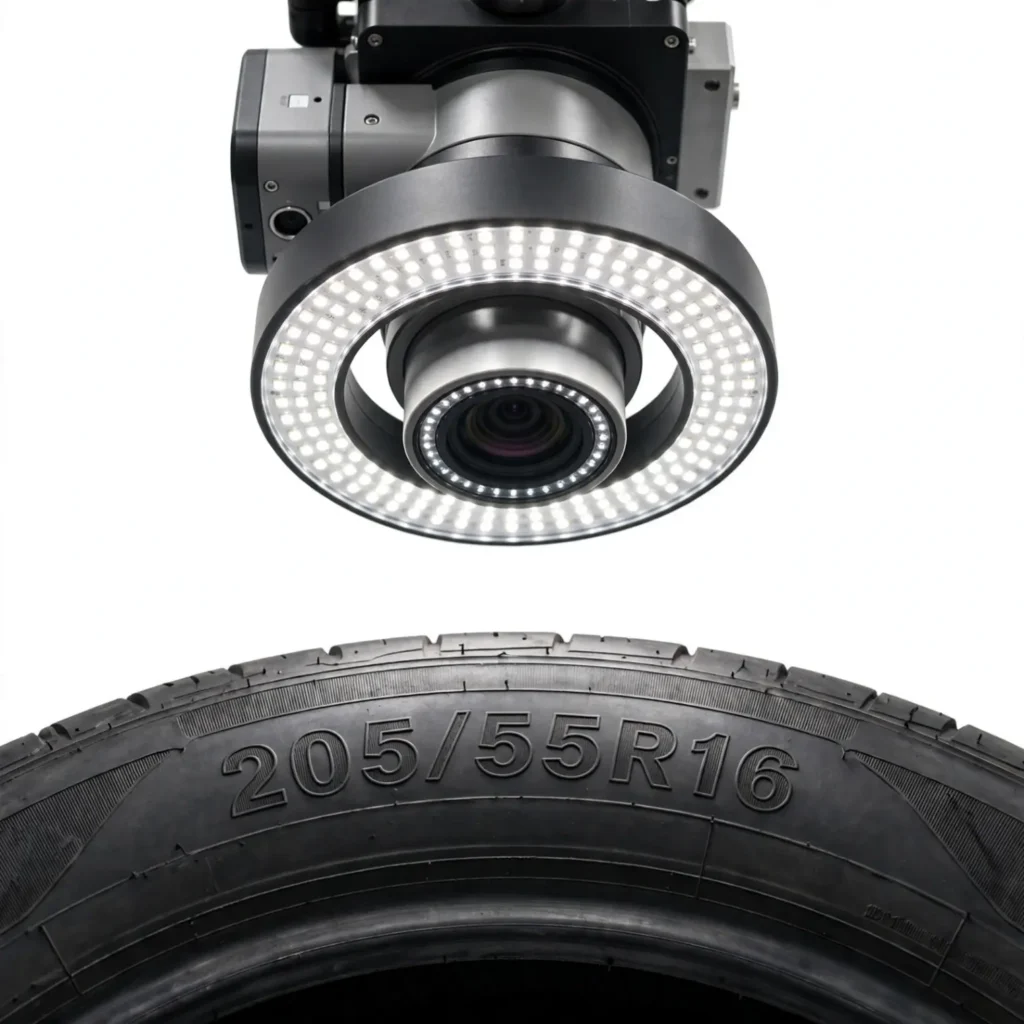
Tyre size must correspond to the intended product specification. Where size information is printed or moulded on the sidewall, a vision system can capture the relevant area and use OCR or other configured image-processing methods to read the available information.
The recognised size can then be compared with the expected value when the required reference data is available. This helps identify mismatches between the inspected tyre and the production requirement.
Typical checks include:
- Reading supported tyre size markings
- Verifying recognised size information
- Comparing size against predefined product data
- Identifying size mismatches
- Generating an identification result
For sidewall marking applications, see our Tyre Sidewall Inspection page.
Tyre Visual Feature Identification
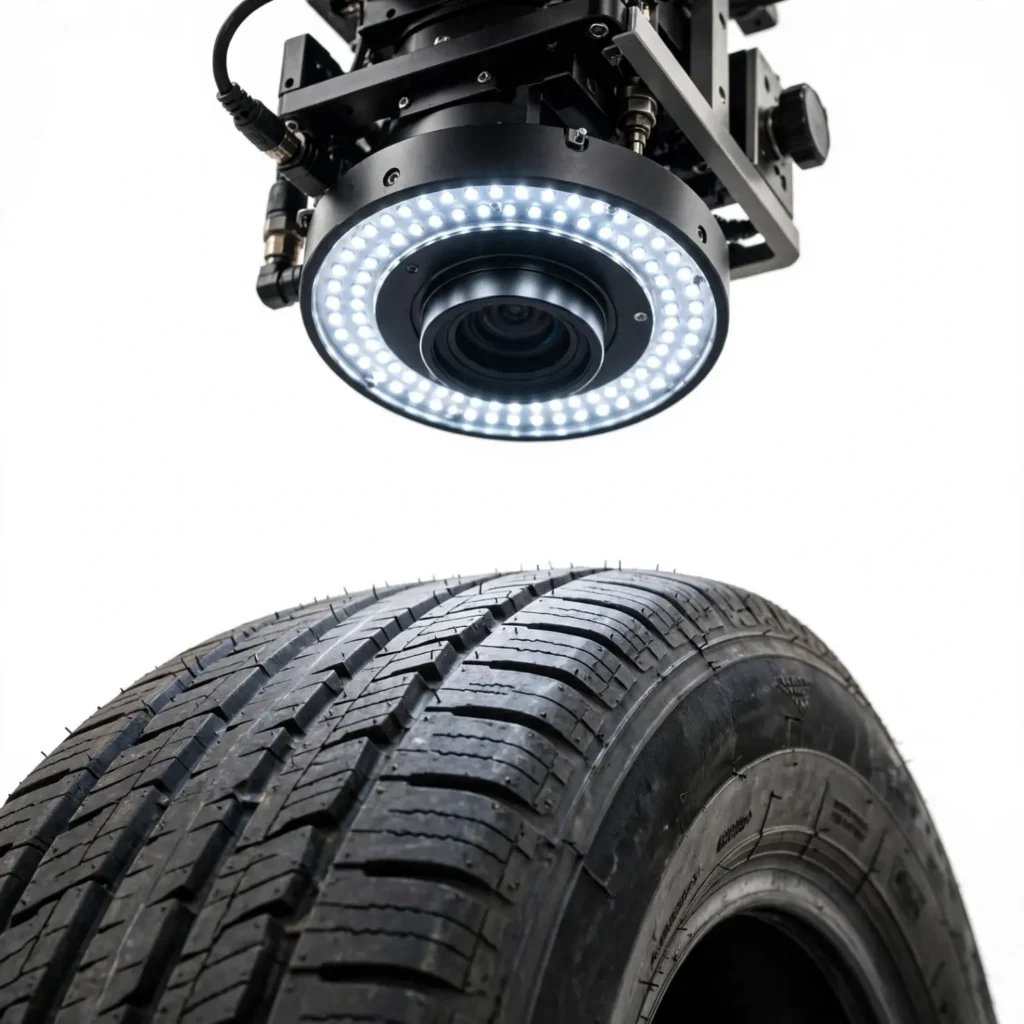
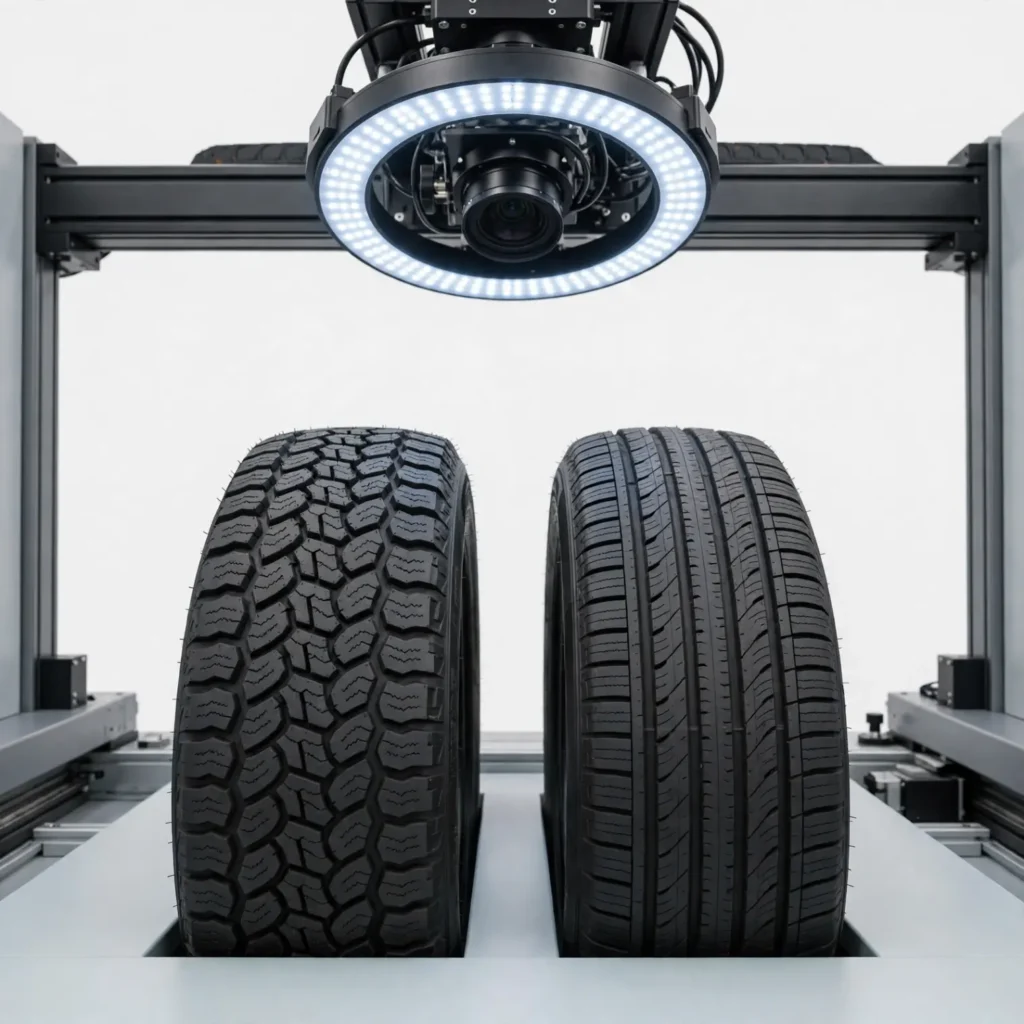
Some identification applications rely on visible product characteristics rather than text or codes. These may include selected tread features, sidewall details or other distinguishable elements of the tyre.
Machine vision can capture and compare the relevant features where the imaging conditions and product design support reliable differentiation. The system is configured to focus on the characteristics needed to distinguish the specified products.
This approach may be useful when manufacturers need to identify tyres through visual comparison rather than relying exclusively on manually entered information.
Tyre Model Identification
Tyre models may have different tread designs, sidewall details or other product-specific characteristics. When these features are suitable for visual recognition, machine vision can compare the inspected tyre with predefined model references.
The system evaluates the selected characteristics to determine which model matches the inspection criteria. This can help manufacturers verify that the expected tyre is present before it proceeds to another production or assembly stage.
Model identification may include:
- Recognition of predefined tyre models
- Comparison of selected visual features
- Reference-image matching
- Model mismatch detection
- Model verification against production requirements
For applications involving tread pattern checks, explore Orchid Technology’s Tread Inspection System.
Tyre Variant Differentiation
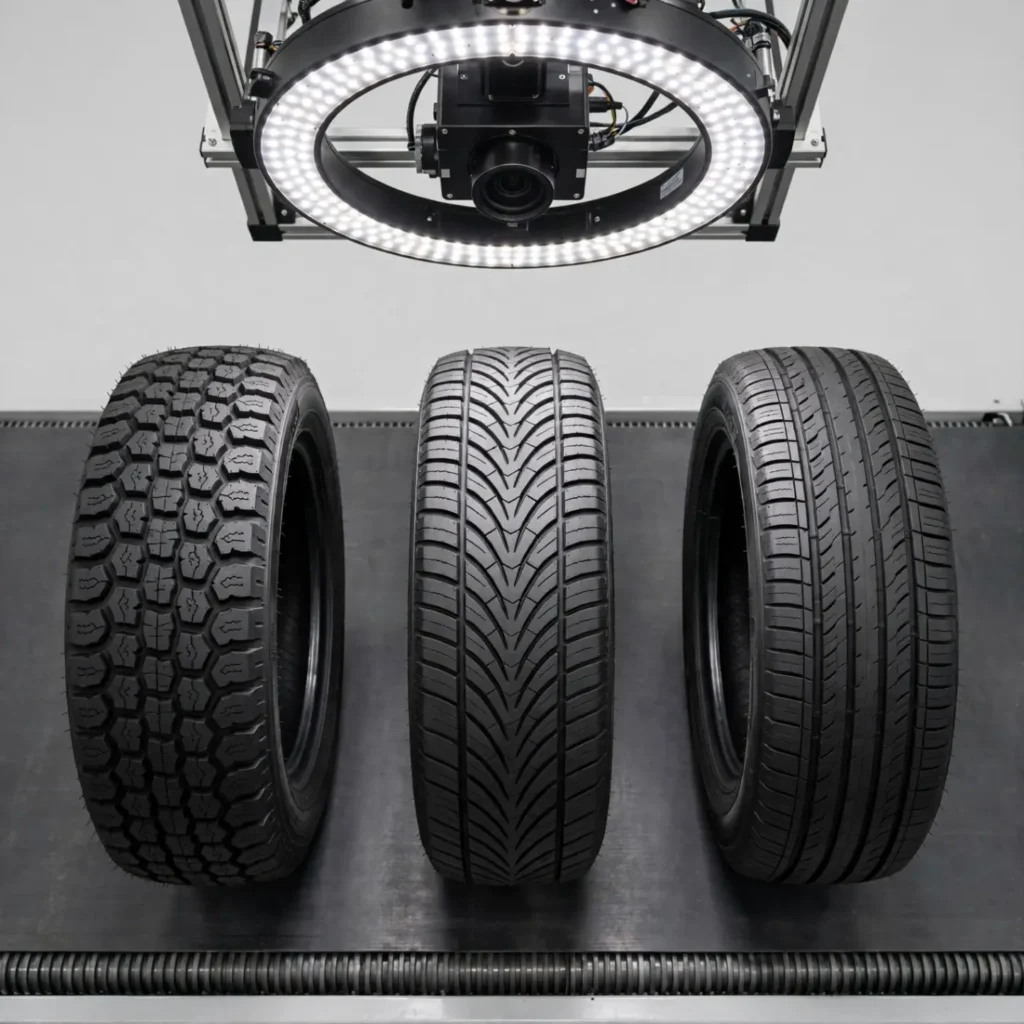
A tyre manufacturer may produce several variants that differ in size, model, tread pattern or sidewall information. When these products share similar appearances, verifying the correct variant becomes important for controlling production flow.
A machine vision system can examine selected features and compare them with the reference criteria assigned to each variant. Where production-order or recipe information is available, the identified tyre can also be checked against the expected product.
Variant differentiation may support:
- Comparison between predefined tyre variants
- Identification of selected tread or sidewall differences
- Verification of product-specific markings
- Detection of incorrect variants
- Comparison with available production references
The identification method depends on whether the variants have sufficiently distinguishable visual features or readable product information.
Correct or Incorrect Tyre Verification
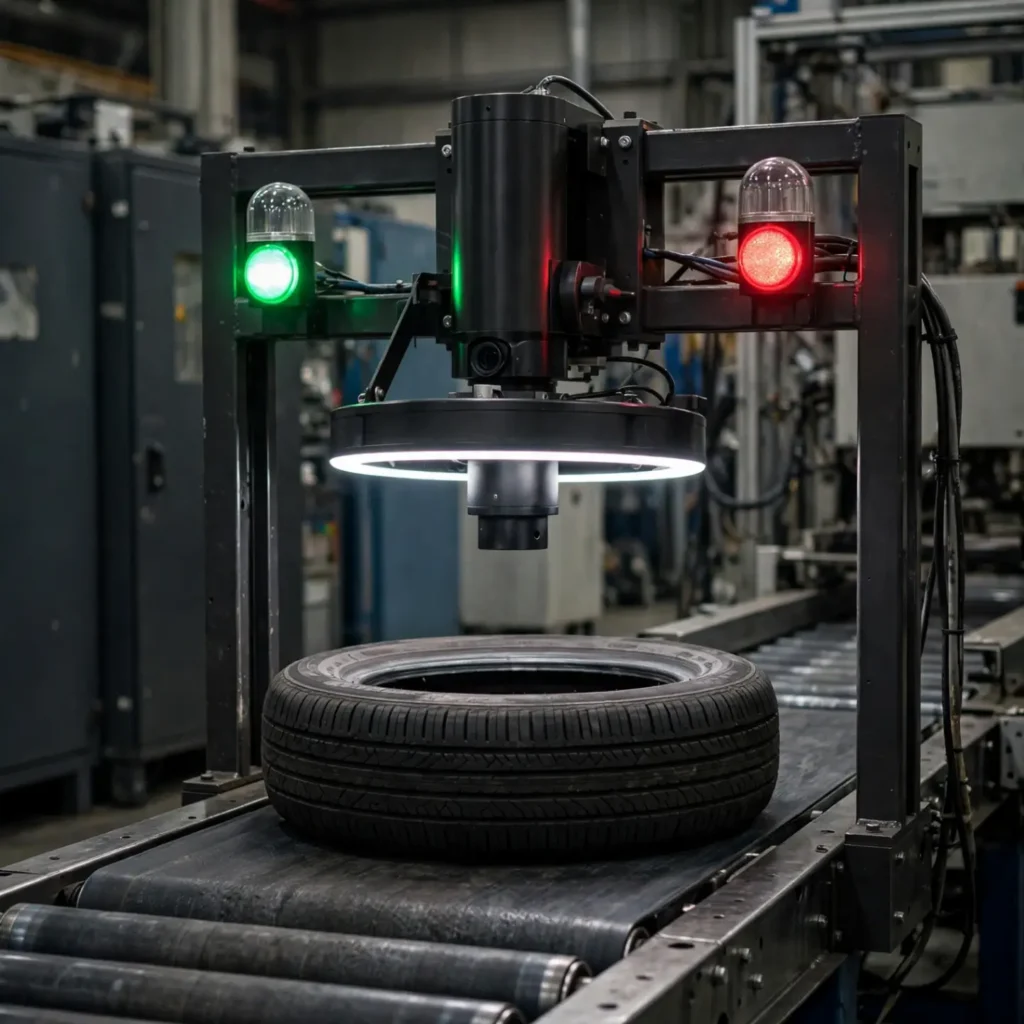
Tyre identification can be used to verify whether the product presented at an inspection station matches the expected production specification. This is particularly relevant where multiple tyre models or sizes are handled within the same facility.
The system compares the identified model, size or variant with the required reference. If the result meets the configured criteria, it can generate an OK status. If the required information does not match, the system can generate an NG status or request further checking.
Typical verification functions include:
- Expected tyre model confirmation
- Size and variant comparison
- Product mismatch detection
- Reference-data verification
- Configured OK/NG result generation
Any rejection, diversion or machine-stop response depends on the control-system integration and the production rules defined for the application.
Need Automated Tyre Identification?
Orchid Technology can help assess machine vision requirements for tyre model recognition, size verification and variant differentiation.
Share your tyre samples, production specifications and inspection conditions to determine which identification method is appropriate for your application.
How Does Machine Vision Enable Tyre Identification?
1.
Image Acquisition
2.
Feature Detection
3.
Image Processing
4.
Model Identification
5.
Size and Variant Verification
6.
Reference Comparison
7.
OK/NG Decision
8.
Production-System Communication
Key Capabilities of an Automated Tyre Identification System
A tyre identification solution can be configured around the identification features, verification rules and production information required by the manufacturer.
| Capability | Application |
|---|---|
| Tyre model identification | Compare selected visual features with predefined model references. |
| Tyre size identification | Read supported size markings and verify the recognised information. |
| Variant differentiation | Distinguish between defined tyre variants using suitable visual features. |
| Tread feature comparison | Compare selected tread characteristics where the application supports it. |
| Sidewall information reading | Use OCR or other configured methods to read supported markings. |
| Product verification | Compare the identified tyre with the expected production specification. |
| Mismatch detection | Flag identification results that do not meet the configured criteria. |
| OK/NG output | Generate an inspection status based on the defined decision rules. |
| Production integration | Communicate results to compatible automation or control systems. |
The actual capabilities available will depend on the selected inspection technology and the requirements of the application.
Applications of Tyre Identification Systems
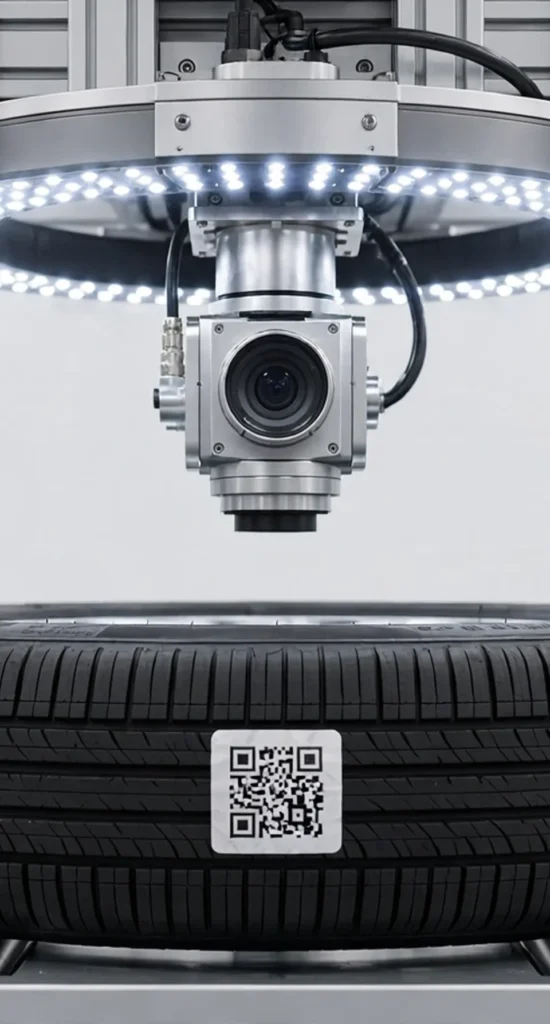
Machine vision-based tyre identification can be used at suitable checkpoints across tyre manufacturing and handling operations. The application depends on when the tyre must be identified and which product characteristics are available for inspection.
Typical applications include:
Tyre model identification: Confirm the model using predefined visual characteristics.
Tyre size verification: Read and compare supported sidewall size information.
Variant identification: Differentiate between selected product variants.
Production-order verification: Compare the identified tyre with available production requirements.
Tread-based identification: Use suitable tread features to distinguish between defined products.
Sidewall-based identification: Examine selected sidewall markings or visual details.
- Incorrect tyre detection: Identify a mismatch between the inspected and expected product.
- Automated inspection checkpoints: Verify tyre identity before a configured downstream process.
Identification with traceability: Associate identification results with relevant records when the required data system is available.
Benefits of Automated Tyre Identification
Automated Model Recognition
Identify defined tyre models using selected visual features and configured reference criteria.
Tyre Size Verification
Check supported tyre size information against the required product specification.
Variant Differentiation
Distinguish between predefined tyre variants to help reduce product mix-ups.
Reduced Manual Identification
Automate repetitive visual comparison and supported information-reading tasks.
Consistent Verification
Apply the same configured identification rules to applicable tyres at the inspection station.
Faster Production Checks
Perform identification within the manufacturing workflow without relying entirely on manual checking.
Mismatch Detection
Flag tyres that do not match the expected model, size or variant according to the inspection settings.
Production-System Integration
Communicate identification results to compatible controls or production systems where required.
Quality-Control Support
Provide an additional verification step to help manufacturers identify product mismatches before subsequent processing.
Tyre Identification Solutions with Orchid Technology
Orchid Technology supports industrial businesses with machine vision and automation solutions for manufacturing applications. For tyre production, a vision-based identification system can be evaluated for model recognition, size verification, variant differentiation and selected product-matching tasks.
Depending on the application requirements, the project assessment may include:
- Reviewing tyre samples and product specifications
- Identifying suitable visual features for recognition
- Evaluating camera, lens and lighting requirements
- Selecting an appropriate image-processing method
- Defining product references and verification rules
- Assessing communication with existing production equipment
- Reviewing inspection needs across different tyre variants
The final configuration depends on the characteristics that must be identified, production speed, available reference data and the required response when a mismatch occurs. Testing representative tyre samples under relevant operating conditions helps establish whether the proposed inspection method is suitable.
Explore our Machine Vision Systems to learn more about Orchid Technology’s industrial inspection and automation applications.