
Print Quality Inspection
Ensuring every print is clear, consistent, and compliant
Ensuring readability through precision inspection
Advanced print verification for critical industries
In pharmaceutical and regulated manufacturing, print quality is essential for accurate product identification, regulatory compliance, and brand integrity. Our vision-based print quality inspection system ensures that all printed information is sharp, legible, and defect-free—eliminating risks associated with unreadable or incorrect prints.
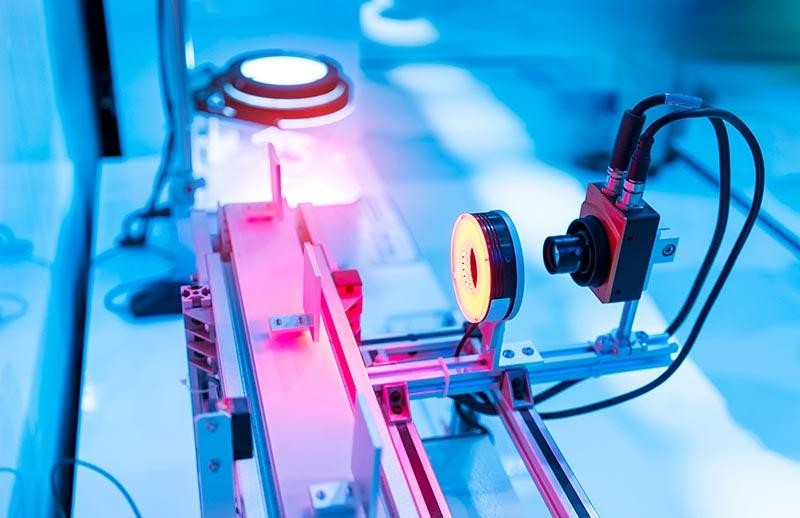
How the Print Quality Inspection System Works
Our system verifies that all printed content on labels, cartons, and packaging is clear, accurate, and meets defined quality standards.
Using high-resolution cameras and advanced image processing algorithms, the system captures and analyzes printed areas in real time. It evaluates text clarity, print consistency, and overall visual quality against predefined benchmarks or reference images.
The system performs high-precision inspection of:
- Text clarity and readability
- Font consistency and character integrity
- Print contrast and density
- Alignment and positioning of printed content
- Surface print quality across packaging
It detects defects such as:
- Smudged or blurred printing
- Faded or low-contrast text
- Missing or broken characters
- Ink spread or bleeding
- Misaligned or skewed prints
- Uneven or inconsistent print density
With real-time inspection and rejection mechanisms, defective products are immediately removed from the production line.
By combining intelligent vision systems with automated inspection, manufacturers can ensure consistent print quality, reduce manual errors, and maintain compliance with industry standards.
Why Print Quality Inspection is Critical in Industry
Print quality inspection is essential to ensure that all critical product information is clearly visible and readable.
Poor print quality can lead to misinterpretation of information, regulatory non-compliance, and risks to patient safety.
Automated inspection ensures:
- Clear Readability – Ensure all information is easily readable
- Regulatory Compliance – Meet strict labeling and printing standards
- Error Prevention – Detect defects before products reach the market
- Brand Protection – Maintain professional and consistent packaging quality
Ensure flawless printing and zero readability issues with advanced inspection systems.
Limitations of Manual Print Inspection in Modern Industry
Human Vision Limitations
Inconsistent Quality Checks
Slow Inspection Process
The Benefits of Print Quality Inspection System
Pharmaceutical industries demand high precision and strict adherence to quality standards.
Identify even minor print defects with accuracy.
Ensure consistent and professional print output.
Detect issues early and prevent defective products.
Meet strict pharmaceutical and packaging standards.
Instant detection and rejection of defective items.
Adaptable to different packaging formats and print technologies.
What do we provide?
As a trusted provider of machine vision and automation solutions, we deliver advanced print quality inspection systems
- Text Clarity Verification – Ensure sharp and readable text
- Contrast & Density Analysis – Detect faded or uneven printing
- Character Integrity Check – Identify broken or missing characters
- Alignment & Position Inspection – Verify correct placement of prints
- Surface Defect Detection – Detect smudging, bleeding, and distortion
- Reference Image Comparison – Match print output with approved standards
- Multi-Surface Inspection – Inspect labels, cartons, and flexible packaging
- High-Speed Inline Inspection – Real-time inspection during production
- Rejection System Integration – Automatically remove defective products
- Data Logging & Reporting – Maintain inspection records and analytics
Frequently asked questions
What types of print defects can the system detect?
It detects smudging, fading, misalignment, broken characters, and contrast issues.
Can it inspect different packaging materials?
Yes, it supports labels, cartons, pouches, and other packaging formats.
Is it suitable for high-speed production lines?
Yes, it performs real-time inspection without affecting production speed.
Does it require a reference image?
Yes, the system compares prints against predefined standards or reference images.
Can it generate reports for quality tracking?
Yes, it provides detailed inspection reports and data logging for analysis.