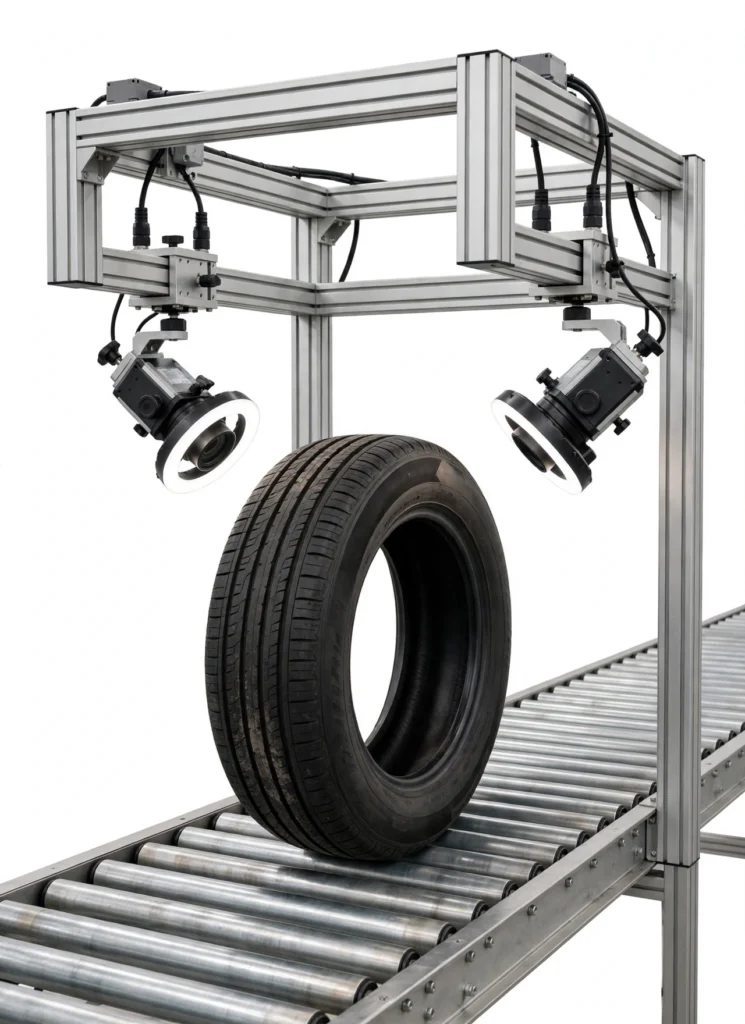
Automated Tyre Label Inspection for Tyre Manufacturing
Tyre Label Verification for Manufacturing Quality Control
In tyre production, a label must correspond to the correct product and be applied in the intended location before the tyre moves forward. A label that is absent, incorrectly positioned, rotated or assigned to the wrong tyre variant can create problems during identification, storage and dispatch.
An automated tyre label inspection system uses machine vision solutions to capture images of the designated label area and assess whether the label meets predefined inspection criteria. This approach reduces dependence on manual visual checks and helps manufacturers apply consistent verification rules during production.
Depending on the application, inspection can cover label presence, placement, alignment and distinguishable features used to identify incorrect labels. This makes machine vision a useful option for tyre manufacturers looking to strengthen label verification at selected production checkpoints.
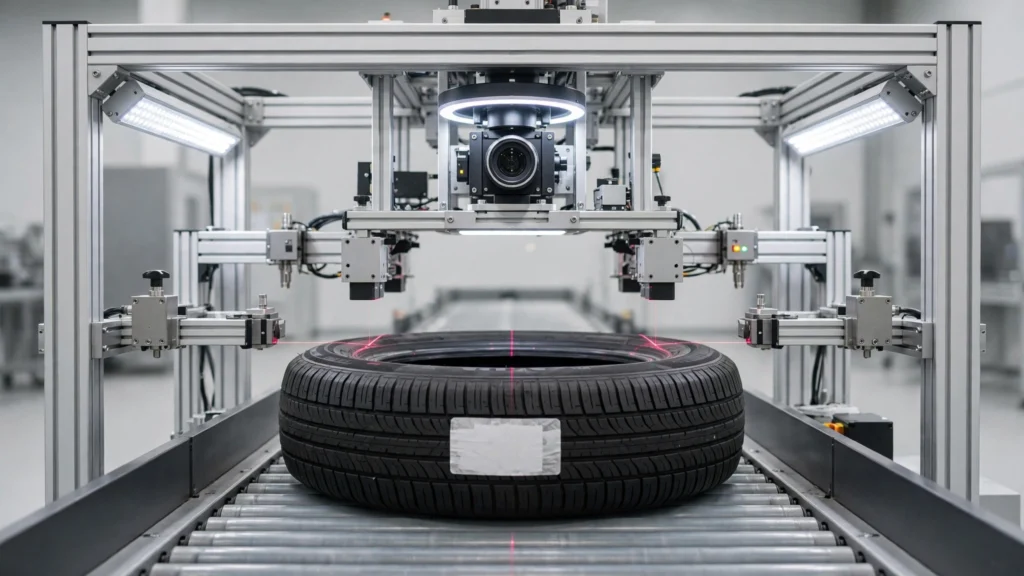
How Does Tyre Label Inspection Work?
A tyre label inspection system uses industrial cameras and machine vision software to examine labels at a designated point in the manufacturing process. The camera captures images of the tyre surface, allowing the system to locate the expected label and check whether it is present in the correct inspection area.
Once the label is detected, the vision software evaluates its position, orientation and alignment against predefined acceptance criteria. Depending on the application, it can also compare selected label features to identify incorrect labels or incorporate OCR and barcode verification when required.
After completing the inspection, the system generates a pass or fail result based on the configured rules. Where supported by the production setup, this result can be communicated to compatible automation equipment to trigger an alert or rejection action, helping manufacturers identify label application errors before the tyre proceeds to the next stage.
Why Is Automated Label Verification Important ?
Tyres may look similar while belonging to different sizes, models or product variants. The label provides an additional means of identifying the product, so errors in label application need to be detected before they lead to further process complications.
Manual inspection may become difficult to maintain consistently when production is continuous or operators must check multiple product variants. A vision-based approach can examine each presented tyre against programmed requirements and provide a result for the next production step. The inspection criteria should be established using actual tyre samples, label specifications and production conditions.
Inspection Functions in a Tyre Label Inspection System
Tyre Label Presence Verification
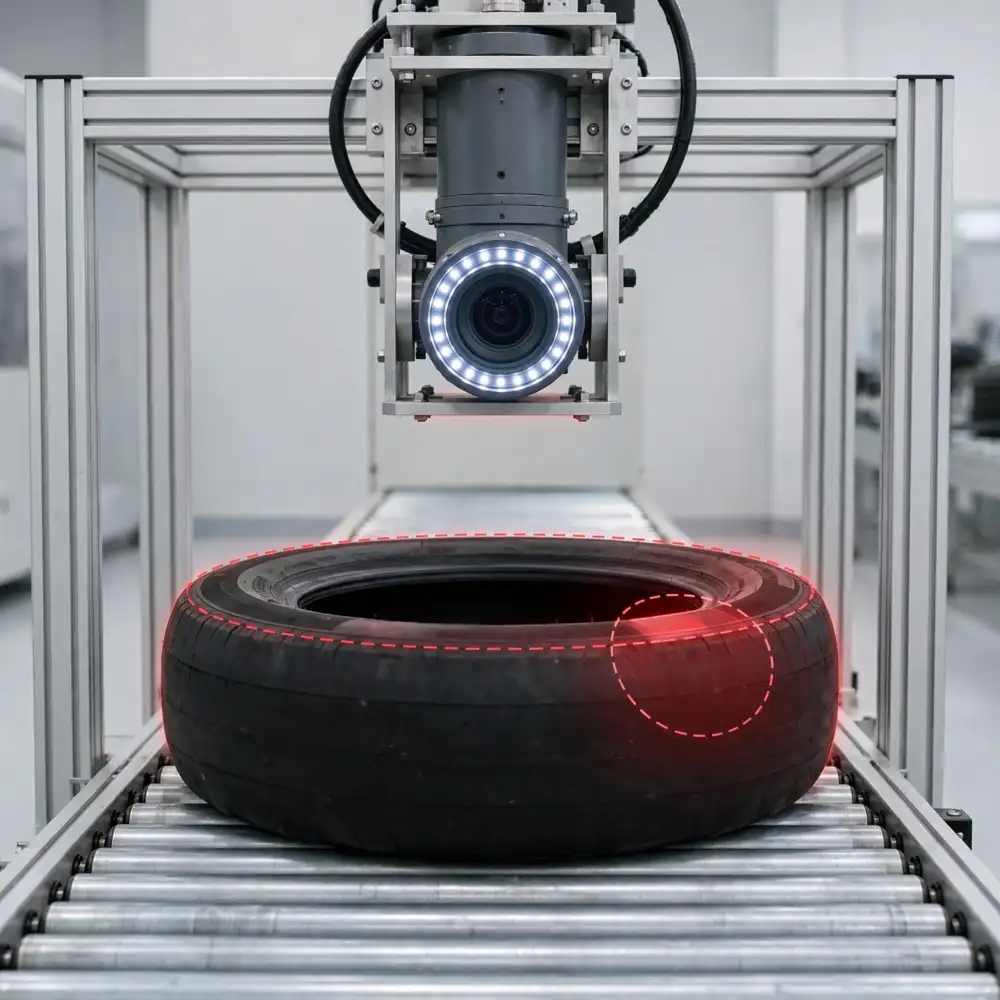
A missing label can leave a tyre without the expected identification information at a particular production stage. Tyre label presence detection checks whether the required label can be identified within the designated inspection area.
The camera captures the relevant region, and the vision application searches for the expected label characteristics. If the label is not detected according to the configured criteria, the system records a failed result.
This check is particularly useful where label application is a required step before the tyre proceeds to another operation.
Tyre Label Position Inspection
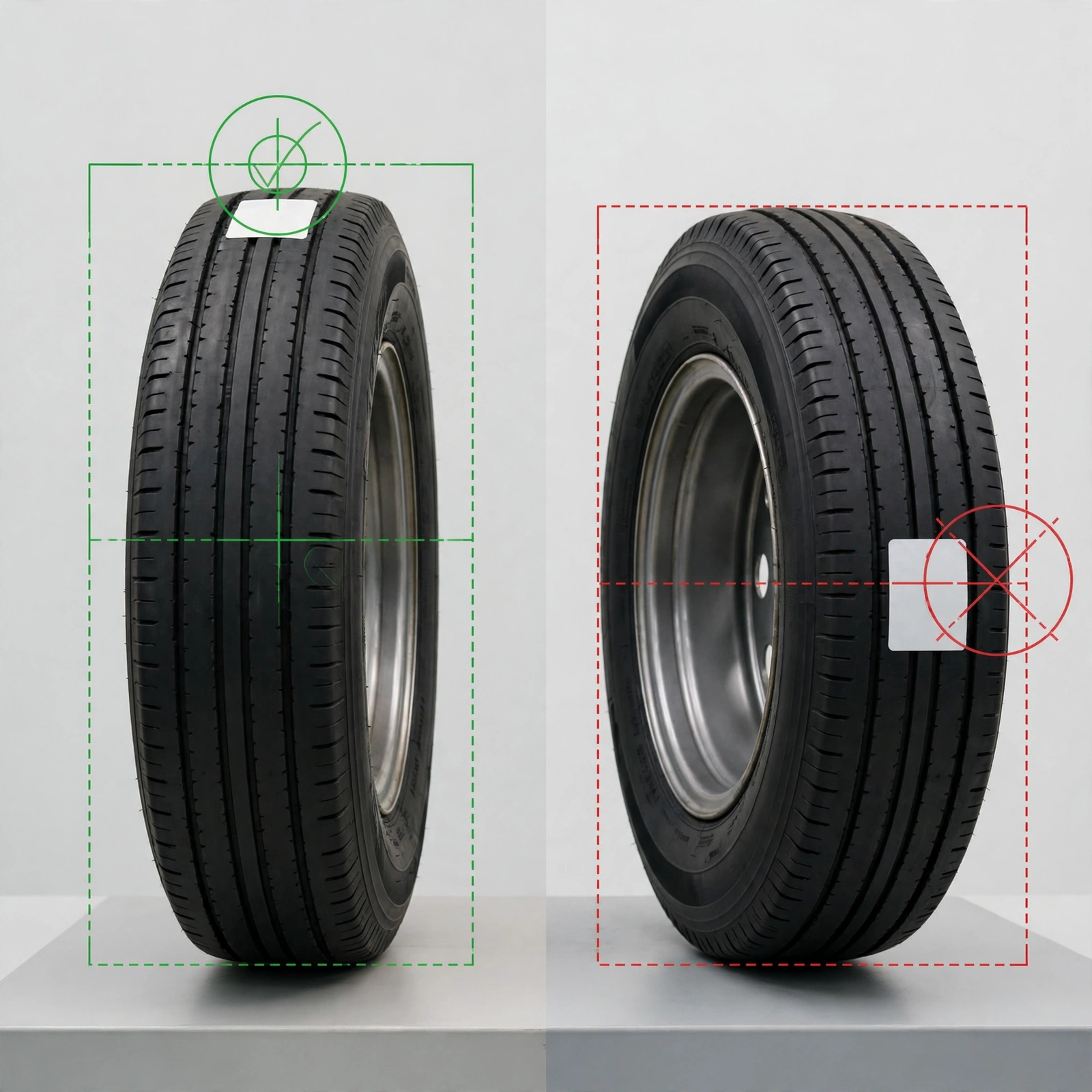
A label may be present but located outside its specified application area. Tyre label position inspection evaluates the detected label location against the placement limits defined for the application.
The inspection can be configured to identify labels that are shifted from the intended position or fall outside an acceptable placement range. The required limits depend on the tyre geometry, label dimensions and application process.
Position verification helps manufacturers assess whether label placement follows the established production requirements rather than checking presence alone.
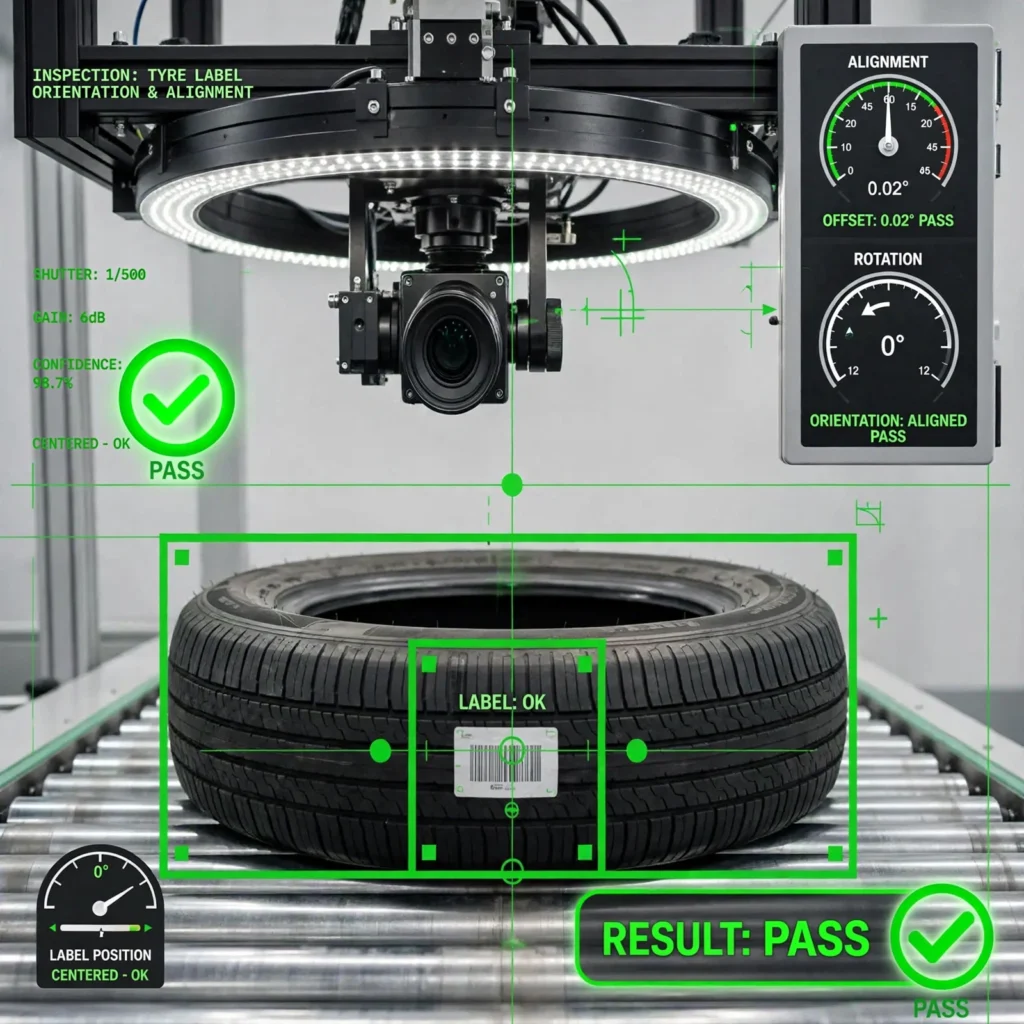
Label Orientation and Alignment Checking
The direction in which a label is applied can matter for subsequent identification and handling. A rotated, tilted or skewed label may fail to meet the manufacturer’s application criteria even when it is in the correct general area.
An automated system can evaluate the label’s angle and alignment using reference features defined during configuration. The inspection then determines whether the observed orientation falls within the permitted limits.
Combining orientation verification with position checking provides a more detailed assessment of label application quality.
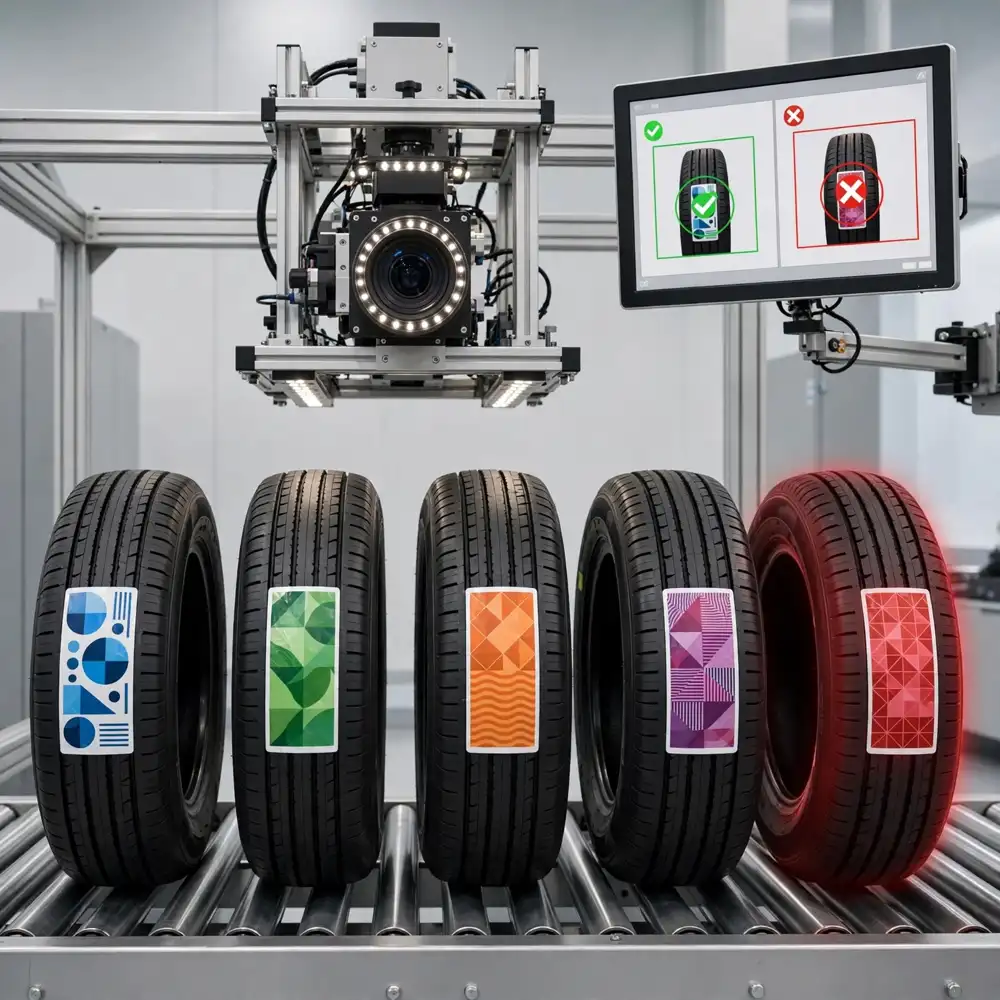
Tyre Wrong Label Detection
Tyre production often involves multiple models, sizes and variants, each with specific labelling requirements. Applying a label meant for a different variant can create a mismatch between the tyre and its displayed information.
Tyre wrong label detection compares selected visual features against criteria defined for the relevant product. Depending on label design, this may include layout, graphics, symbols or other distinguishable features.
Where character reading or barcode/QR validation is required, those functions must be included in the inspection where technically suitable. Simple visual comparison is not full text or code verification.
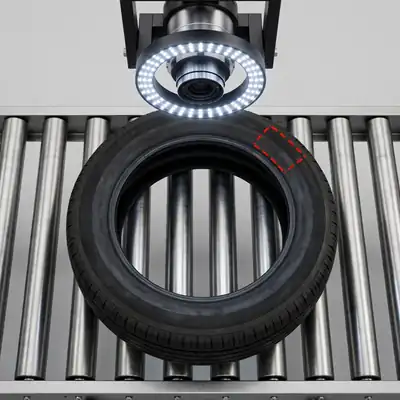
Tyre Missing Label Detection
Tyre missing label detection focuses specifically on identifying tyres where the expected label cannot be found. The system examines the relevant inspection zone and determines whether the configured label features are visible.
When the label is absent, the inspection application can produce a failure signal or notify the connected control system, depending on the implementation. A rejection mechanism or operator alert can be considered if supported by the production setup.
This function can operate independently or alongside checks for label position, alignment and product-specific characteristics.
Need Automated Tyre Label Inspection?
Share your tyre labelling requirements, production-line setup and inspection challenges with Orchid Technology.
Our team will help you evaluate a suitable machine vision approach for detecting missing labels, incorrect placement, alignment issues and other defined label inspection requirements in your tyre manufacturing process.
How Does a Machine Vision Tyre Label Inspection System Operate?
1.
Tyre Positioning
2.
Image Capture
3.
Image Quality Control
4.
Label Location
5.
Placement Assessment
6.
Label Feature Verification
7.
Inspection Result
8.
Result Communication
What Can an Automated Tyre Label Inspection System Verify?
| Inspection Requirement | What the System Evaluates |
|---|---|
| Label Presence | Whether the expected label is detected. |
| Label Placement | Whether the label falls within the specified area. |
| Orientation | Whether the label direction meets the configured limits. |
| Alignment | Whether the label is tilted or skewed beyond the accepted range. |
| Label Variant | Whether selected visual features match the required label. |
| Missing Label | Whether the required label is absent. |
| Inspection Status | Whether the observed result meets the programmed criteria. |
| System Communication | Whether the inspection result can be sent to compatible equipment. |
Additional functions, such as text recognition or barcode verification, require appropriate application design and should be assessed against the actual label samples.
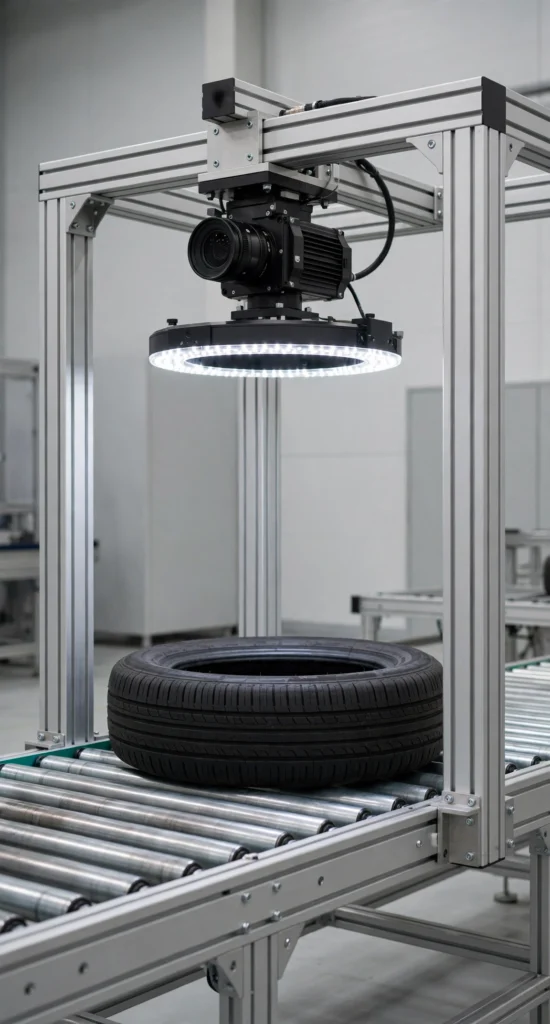
Where Can Tyre Label Inspection Be Used?
Automated label verification can be considered at suitable points in tyre manufacturing and handling, depending on when labels are applied and when their accuracy must be confirmed. The best inspection location depends on the manufacturing sequence, accessibility of the label, line speed and the consequences of an undetected error.
Typical applications include:
- After label application: Confirm that the required label has been applied.
- Before the next production stage: Identify missing or incorrectly positioned labels before further processing.
During variant changeovers: Check selected label characteristics against the requirements for different tyre models or sizes.
At identification checkpoints: Verify label placement before a tyre moves to a subsequent handling or identification operation.
- Before dispatch preparation: Inspect labels at a suitable downstream station where final label checks are required.
Within automated inspection cells: Add label verification to a broader machine vision inspection process where appropriate.
Benefits of Machine Vision-Based Tyre Label Verification
More Consistent Label Checks
Apply predefined inspection rules to the label characteristics included in the application.
Earlier Identification of Missing Labels
Flag tyres where the expected label is not detected at the inspection station.
Better Control of Label Placement
Check label position and alignment against specified limits.
Detection of Selected Label Mismatches
Identify differences in configured visual features that may indicate an incorrect label.
Less Dependence on Repetitive Visual Checking
Use automated image analysis for defined checks that would otherwise require repeated operator attention.
Clearer Inspection Results
Generate pass or fail outcomes based on established acceptance criteria.
Support for Production Automation
Communicate inspection results to compatible equipment when required by the process.
Flexible Inspection Configuration
Select the checks needed for the particular tyre type, label design and manufacturing requirement.
Support for Label Quality Control
Add a defined verification step to the manufacturer's existing quality process.
Tyre Label Inspection Solutions from Orchid Technology
Orchid Technology provides industrial automation and machine vision solutions for manufacturing inspection applications. For tyre manufacturers, a tyre label inspection system can be developed around the specific label errors, placement conditions and verification requirements that need to be addressed.
The proposed application may include:
- Camera and Lens Selection: Choose imaging components suited to the inspection area and required image detail.
- Lighting Configuration: Select lighting to improve the visibility of relevant label features.
- Label Detection: Locate the expected label within the captured image.
- Placement and Alignment Checks: Assess the label’s position and orientation against specified limits.
- Incorrect Label Verification: Evaluate selected label characteristics against defined product requirements.
- Missing Label Identification: Detect when the expected label cannot be found.
- Inspection Result Generation: Apply configured rules to determine the inspection outcome.
- Automation Communication: Connect the result to compatible production equipment where required.
The appropriate configuration should be determined after reviewing representative tyre samples, label variations, inspection tolerances, available installation space and production speed.
Orchid Technology can also help assess related applications through its machine vision inspection solutions and Banner Barcode & Vision Products pages.