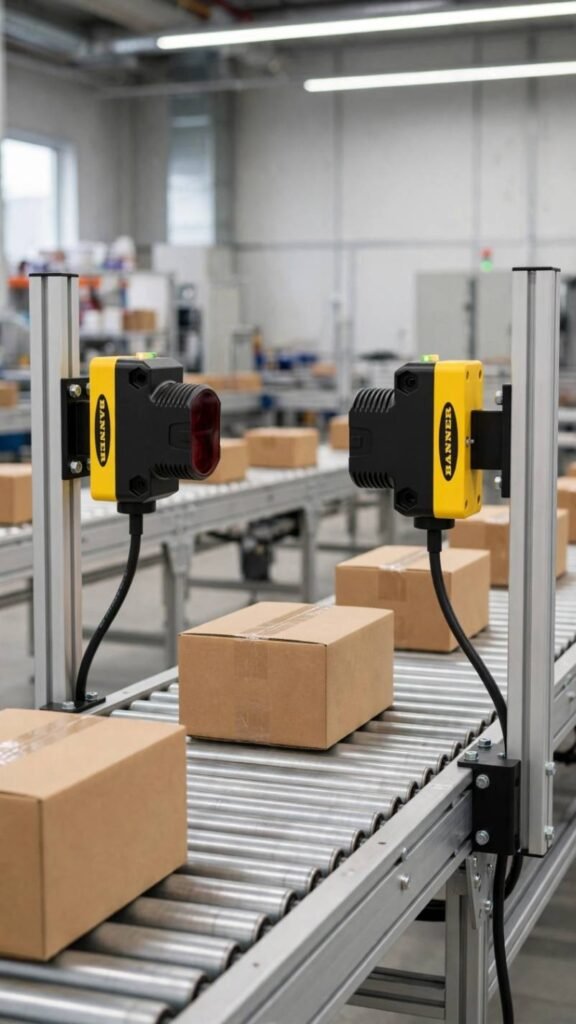
Banner Sensor Solutions for Industrial Automation
BANNER - Sensor
Banner - Sansors
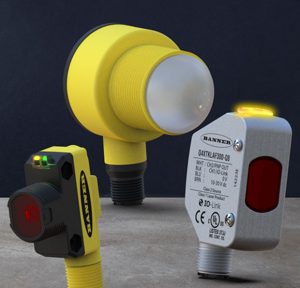
- Banner Engineering has a wide variety of sensors to solve challenging problems all over the world. New and innovative technology in photoelectric, laser distance measurement, ultrasonics, and fiber optics work to solve almost any industrial automation application.
Photoelectric Sensors
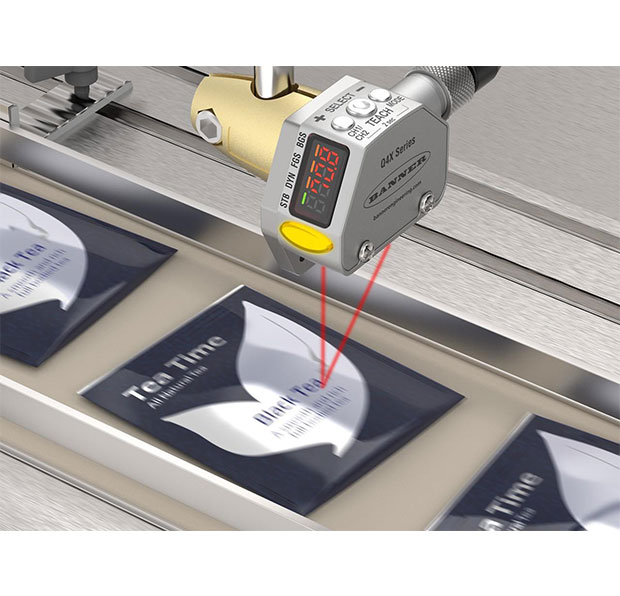
- Banner offers the world’s most complete line of photoelectric sensors – over 12,000. Photoelectric sensors, also known as photo eyes, emit a beam of light that is used to detect the presence or absence of items and equipment or changes in surface conditions. When the emitted light is interrupted or reflected by the object, the change in light patterns is measured by a receiver and the target object or surface is recognized. Photoelectric sensors are very common in industrial manufacturing fields such as material handling, packaging, food and beverage, medical, and many others.
- Depending on the style selected, they can be used with or without a reflector, be self-contained, long-range, heavy-duty, or compact. There are many different housing and mounting options to offer a correct fit that meets the demands of each application. They perform a wide variety of tasks and some of them can even be used in harsh environments.
Laser Distance Measurement
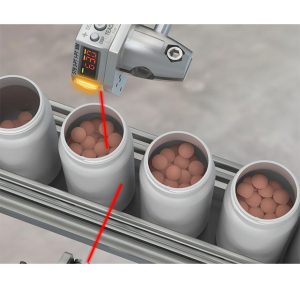
- Laser diode sensors combine the alignment advantages of a visible sensing beam with the increased sensing range of a laser. Devices are available with either Class 1 or Class 2 lasers.
Ultrasonic Sensors
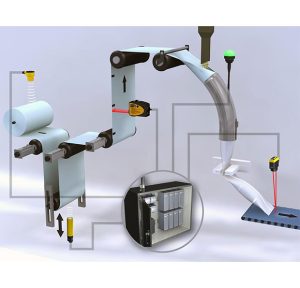
- Ultrasonic sensors use sound waves rather than light, making them ideal for stable detection of uneven surfaces, liquids, clear objects, and objects in dirty environments. These sensors work well for applications that require precise measurements between stationary and moving objects.
Fiber Optic Amplifiers
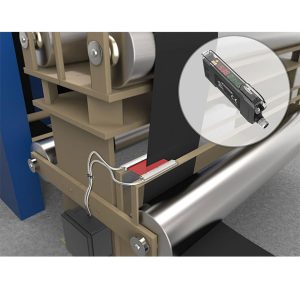
- Fiber optic sensors are small enough to fit in confined areas and can be positioned precisely where needed with flexible fibers.
Fiber Optics
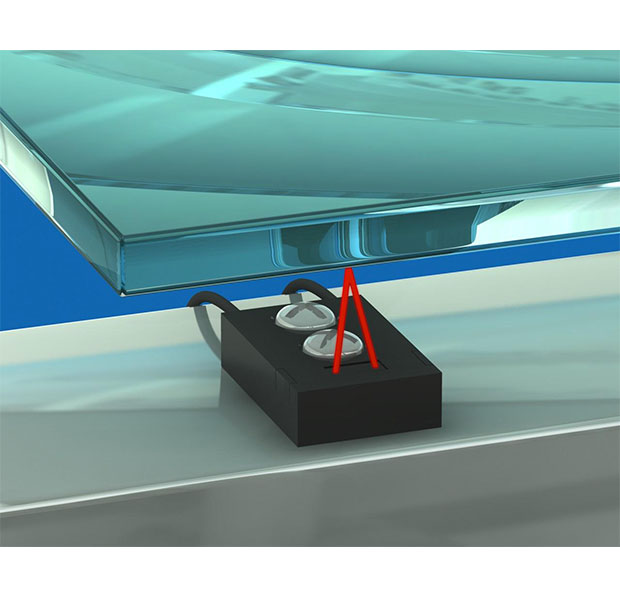
- Fiber optic systems are typically used in harsh conditions, including high vibration, extreme heat, and noisy, wet, corrosive or explosive environments. Fibers are also used in confined areas since many models can be bent to fit precisely where needed.
- Glass fibers are mostly used in challenging environments, such as applications with high temperatures, corrosive materials or moisture. Plastic fibers are typically used for more general purpose applications where they can tolerate extreme bending and be cut to length to fit in limited space setups.
- Banner Engineering offers a wide range of fiber optics and compatible fiber optic amplifiers.
Measuring Arrays
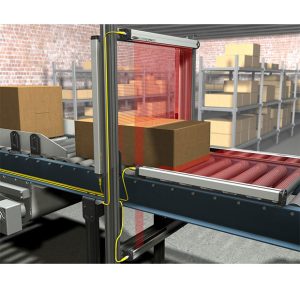
- Using an array of closely spaced light beams, measuring light screens are designed for profiling, inspections, and process monitoring.
Registration Mark, Color and Luminescence Sensors
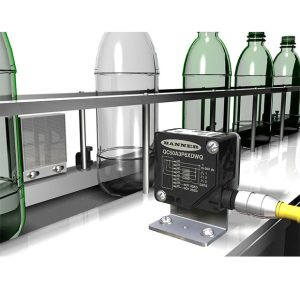
- Registration mark sensors, also known as color contrast sensors, act as a color detector by identifying subtle color contrasts to inspect registration marks, using one, two or three color LEDs.
Slot, Label and Arrays
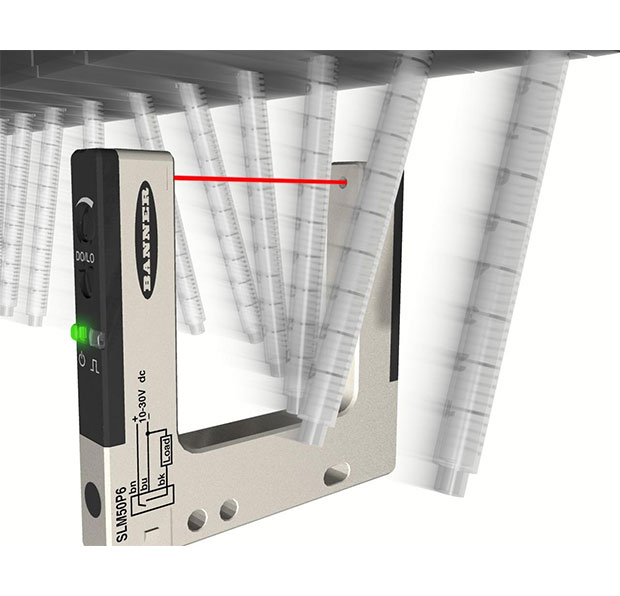
- Slot, label, and array sensors are specialty sensors designed to solve specific applications.
- Slot sensors detect objects that pass between the two arms – one with the emitter and the other with the receiver. The fixed slot width provides reliable opposed-mode sensing of objects as small as 0.30 mm.
- Ideal for counting, sensing parts on conveyor rails and belts, detecting edges and other applications.
- Label sensors are designed to reliably detect either the labels or their backing for use on labelling equipment. These rugged, high speed sensors have a response speed of up to 40µs (12.5 kHz switching frequency) for increased position accuracy.
- Array sensors provide a wide area of detection with different resolutions for different sized objects. Some can reliably see objects as small as 5.6 mm or extremely flat objects such as an envelope. These sensors are commonly used for leading edge detection or Pick-to-Light applications.
Radar Sensors
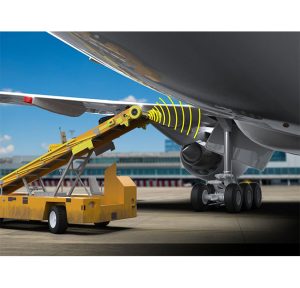
- Radar sensors use Frequency Modulated Continuous Wave (FMCW) radar to reliably detect moving or stationary targets. Lower frequency radars can see high dielectric objects very well including cars, trains, trucks, and cargo even in extreme weather conditions. Higher frequency radar can see a wider array of objects and will be more robust than an ultrasonic sensor in most applications, including outdoors. Radar-based sensors are also ideal for collision avoidance on board mobile equipment such as reach stackers, forklifts, and mining vehicles or port machinery such as carriers, handlers, and shippers.
Temperature & Vibration Sensors
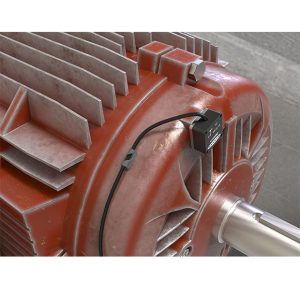
- Temperature sensors detect small differences between the temperature of an object and the surrounding ambient temperature.
Pick-to-Light
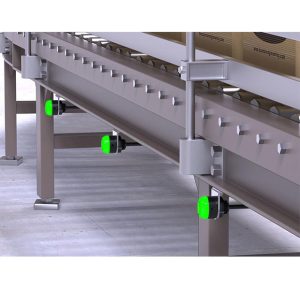
- Pick-to-light devices and systems help industrial automation manufacturers reduce the risk of error in the assembly process, boosting product quality and reducing cost.
Banner Sensors for Modern Manufacturing Processes
Reliable sensing plays an important role in automated production by helping manufacturers detect products, monitor movement, measure distances and maintain consistent operations. Selecting a suitable sensor involves considering factors such as target material, sensing range, operating environment and machine requirements.
Orchid Technology supports industrial customers with Banner Engineering sensor technologies for different automation applications. From basic object detection and distance measurement to label sensing and process monitoring, we help manufacturers, OEMs and machine builders identify suitable sensor options based on their application and integration needs. For applications requiring detailed product or print verification, explore our machine vision solutions.
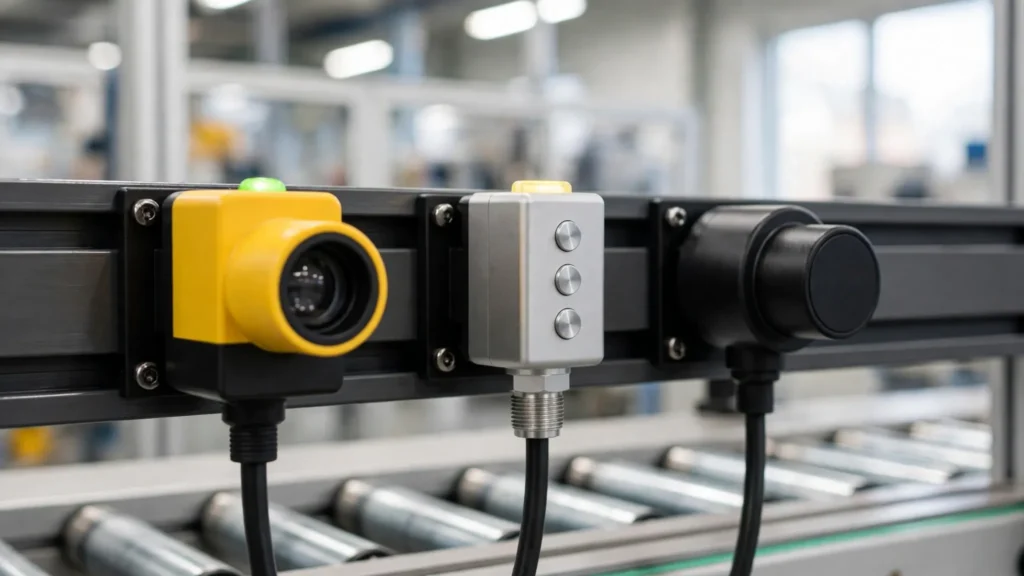
Banner Engineering Sensor Types and Applications
Banner Engineering offers different sensor technologies for object detection, measurement, position monitoring and other industrial sensing requirements. Each category is designed for particular detection tasks and operating conditions.
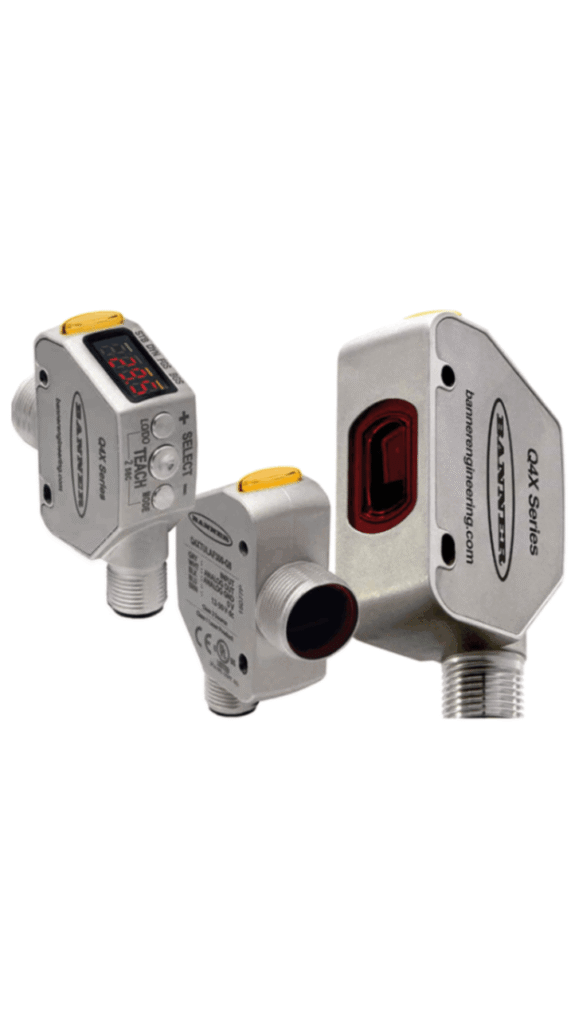
1. Photoelectric Sensors for Industrial Object Detection
Banner photoelectric sensors use emitted light to detect the presence or absence of an object. Depending on the sensing mode and selected model, they can detect products on conveyors, monitor component movement, identify objects at machine stations and support automated counting.
Typical applications:
- Product presence and absence detection
- Conveyor and packaging-line monitoring
- Part counting and position checks
- Object detection at automated workstations
The appropriate sensing mode, range and sensor design should be selected according to the object’s surface, size, colour and installation conditions.
For packaging applications where the presence of printed information also needs to be verified, explore our Missing Print Detection System, which uses machine vision to check whether required printed information is present.
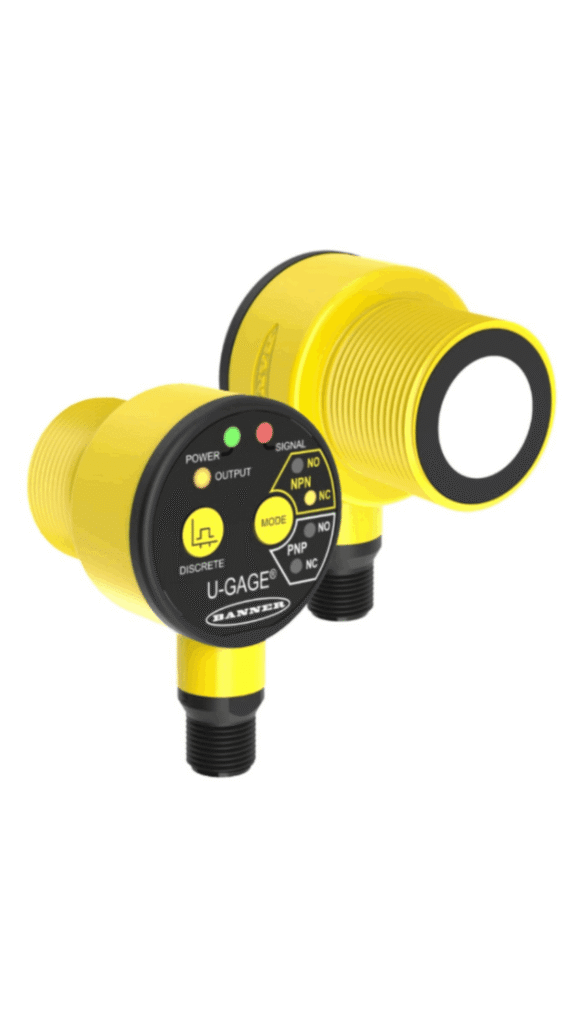
2. Ultrasonic Sensors for Distance and Object Detection
Banner ultrasonic sensors use sound waves rather than light to detect objects or measure distance. Depending on the model and setup, they can be suitable for applications involving uneven surfaces, liquids and certain clear objects.
Typical applications:
- Object detection in material handling
- Distance and position monitoring
- Liquid-level-related detection applications
- Detection tasks where optical sensing may be less suitable
Selection should account for the target surface, sensing distance, environment and required measurement performance.
For bottle manufacturing and packaging applications, our Bottle Fill Level Inspection page explains how machine vision can be used to check liquid fill levels. This is a related inspection application rather than a claim that an ultrasonic sensor is used in that system.

3. Laser Distance Measurement Sensors
Banner laser distance measurement sensors use a focused light beam to detect distance or position, depending on the selected sensor and configuration. They can support applications that require controlled positioning or distance feedback.
Typical applications:
- Object-position monitoring
- Distance measurement on production equipment
- Position checks in material handling
- Selected inspection and process-monitoring tasks
The required measurement range, target characteristics, resolution and repeatability should guide product selection.

4. Fiber Optic Amplifiers for Industrial Sensing
Banner fiber optic sensing systems use optical fibers to carry light to and from a sensing point, while a compatible amplifier processes the optical signal. The small sensing end and flexible fiber options can help address applications with limited mounting space.
Typical applications:
- Detection in confined machine spaces
- Small-part sensing
- Sensing points that are difficult to access
- Selected applications with challenging mounting conditions
The fiber type, amplifier compatibility, sensing distance and environmental requirements must be checked before selecting a configuration.
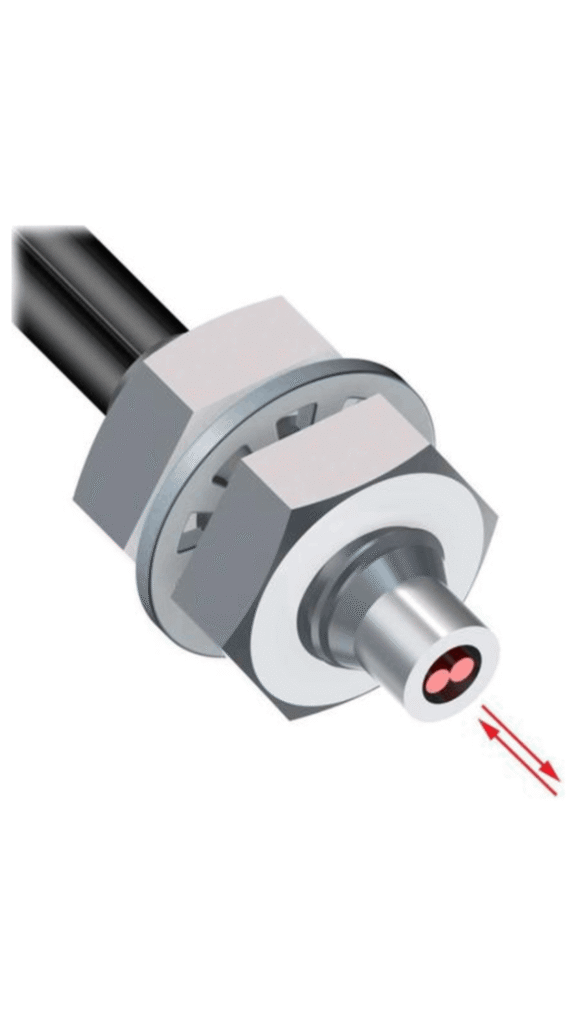
5. Fiber Optic Sensors
Banner Engineering offers fiber optic solutions designed to work with compatible fiber optic amplifiers. Depending on the selected fiber, they can support sensing in confined spaces or environments where the sensing head must be positioned separately from the amplifier.
Typical applications:
- Small components and restricted sensing locations
- Machine installations with limited mounting space
- Selected applications involving vibration, moisture or temperature challenges
- Custom positioning of a sensing point
Glass and plastic fibers have different characteristics. Select the fiber according to the application environment, bend requirements and compatibility with the amplifier.

6. Measuring Arrays for Profile and Object Detection
Measuring arrays use multiple closely spaced light beams to detect object profiles, edges or dimensions within the sensing area. Depending on the model, they can support monitoring and inspection tasks where a single sensing point may not provide enough information.
Typical applications:
- Object profiling and dimensional checks
- Leading-edge detection
- Package and product monitoring on conveyors
- Process monitoring and selected inspection tasks
Beam spacing, detection area, object size and the required output should be considered during selection.
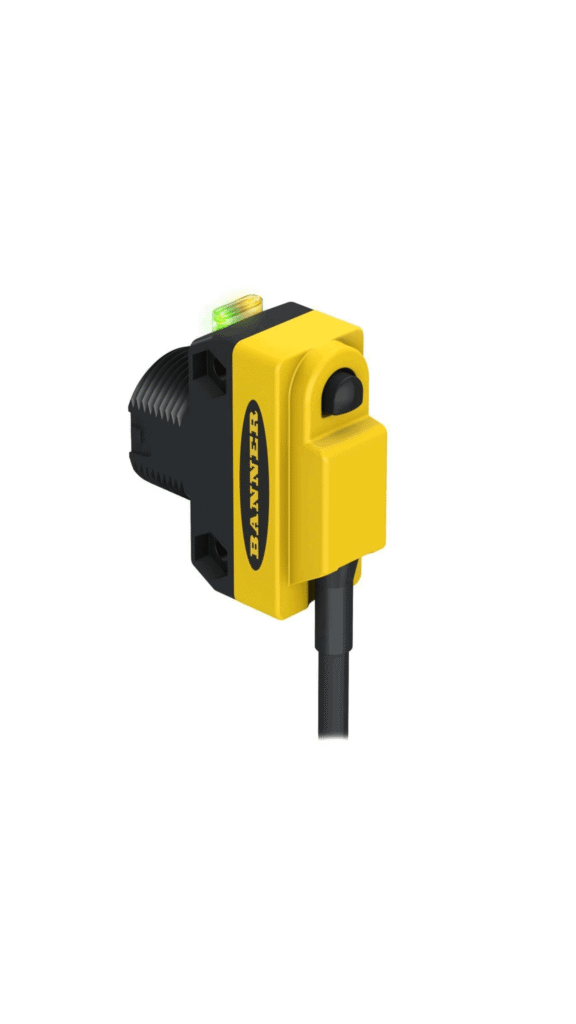
7. Registration Mark, Colour and Luminescence Sensors
Banner registration mark, colour and luminescence sensors are designed to detect registration marks or distinguish specific colour, contrast or luminescence characteristics, depending on the model. They can help machines identify a print mark or a defined visual feature at the correct point in a process.
Typical applications:
- Registration-mark detection in printing
- Print-position triggering
- Colour or contrast differentiation
- Detection of selected luminescent marks
Performance depends on the mark, background, material, contrast and sensor configuration.
For applications requiring more detailed verification of printed colours and alignment, explore our colour and Registration Inspection System, which uses machine vision to check print-colour consistency and alignment between printed elements.

8. Slot, Label, Edge and Area Detection Sensors
Banner’s portfolio includes specialised sensors for detecting objects within a defined slot, sensing labels or backing material, and detecting objects across a wider area. The exact function depends on the sensor category and model.
Typical applications:
- Label detection on labelling machines
- Part counting in defined sensing paths
- Edge and leading-edge detection
- Detection of small or flat objects in suitable applications
These sensors can support repeatable detection where the sensing geometry and response time match the production process.
When an application requires more than detecting the presence of a label, machine vision can help verify additional details. For example, our label inspection system supports configured checks for label information and print quality, while the Full Label Inspection System covers label presence, placement, artwork, print and data verification.
These are Orchid machine-vision inspection applications, not claims that the systems use Banner sensors.
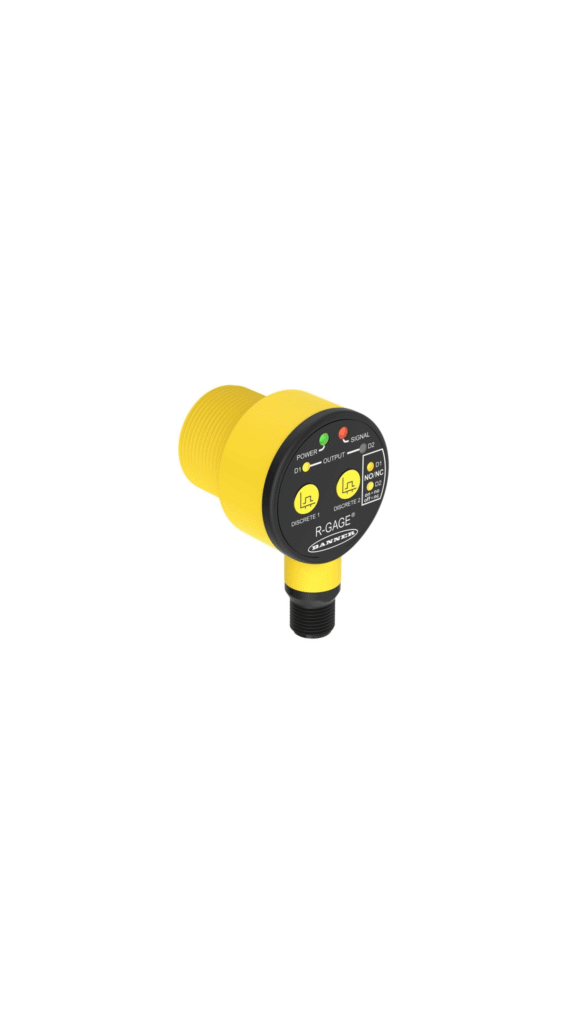
9. Radar Sensors for Industrial Detection
Banner radar sensors use radio waves to detect moving or stationary targets. Depending on the model, target and operating conditions, radar can support detection tasks in outdoor or industrial environments where other sensing technologies may be less suitable.
Typical applications:
- Mobile equipment and vehicle detection
- Collision-avoidance applications
- Target detection in material-handling environments
- Selected outdoor monitoring and positioning tasks
Frequency, target properties, range, mounting position and environmental conditions affect performance. Choose a sensor based on the actual detection requirement.
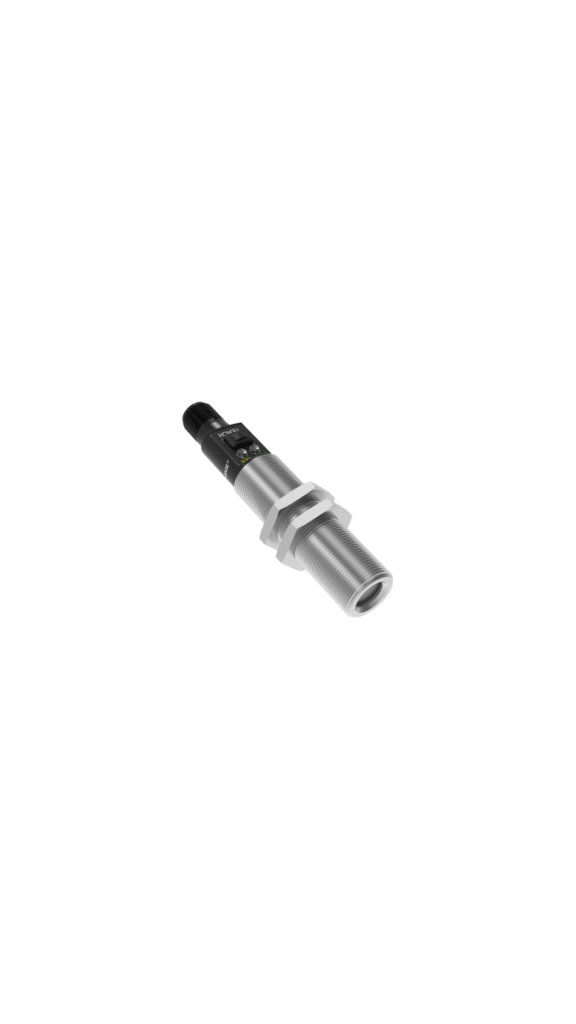
10. Temperature Sensors
Banner Engineering temperature sensors support temperature detection and monitoring for industrial processes and equipment. Depending on the model, options include non-contact infrared sensing and sensors designed for monitoring ambient conditions.
Typical applications
- Non-contact temperature monitoring of selected targets
- Temperature-based part verification
- Monitoring equipment and operating conditions
- Temperature and humidity monitoring in suitable environments
The correct sensor depends on the target material, temperature range, sensing distance and whether contact or non-contact measurement is required.
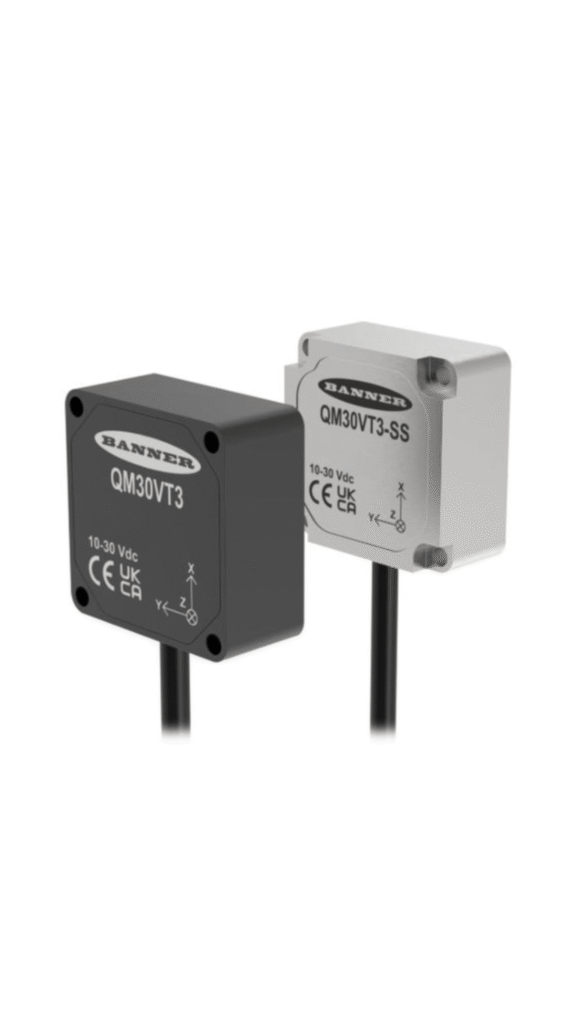
11. Vibration Sensors and Condition Monitoring
Vibration sensors monitor machine vibration to help identify changes in equipment condition. Banner offers wired and wireless condition-monitoring options, including sensors that measure vibration and temperature. These technologies can support maintenance teams in identifying potential mechanical issues before they lead to unexpected downtime.
Typical applications
- Motor and bearing condition monitoring
- Detection of changes associated with imbalance or misalignment
- Monitoring rotating machinery
- Supporting predictive maintenance programmes
The required measurement parameters, mounting location, communication method and monitoring system should be considered when choosing a solution.

12. Pick-to-Light Sensors and Systems
Pick-to-light technology helps guide operators through picking, assembly or material-handling tasks using visual indicators at designated locations. Banner offers pick-to-light products and systems, including solutions using its PICK-IQ technology.
Typical applications
- Order-picking and kitting
- Assembly instructions and part selection
- Material presentation at workstations
- Pick verification and error-proofing workflows
The system should be selected according to the workstation layout, number of picking locations, required feedback and integration requirements.
Discuss Your Banner Sensor Application with Orchid Technology
Looking for a sensor for object detection, distance measurement, label sensing or process monitoring? The right technology depends on your machine, target material and operating conditions.
Share your application details with Orchid Technology to evaluate suitable Banner Engineering sensor technologies and product options for your requirements.
How to Choose the Right Banner Sensor for Your Application
- Target material: Identify whether the object is metal, plastic, glass, liquid or another material.
- Sensing distance: Determine how far away the object needs to be detected or measured.
- Operating environment: Consider dust, moisture, temperature, vibration and other site conditions.
- Installation space: Check the available mounting area and sensor positioning.
- Response time: Ensure the sensor can operate at the required production speed.
- Output and integration: Check compatibility with the machine’s control system and required electrical or communication outputs.
The following guide can help identify which sensor category to evaluate for a particular task.
How to Choose the Right Sensor
Match your application requirements with the appropriate sensing technology.
| Application Requirement | Sensor Category to Evaluate |
|---|---|
| Detect an object’s presence or absence | Photoelectric sensors |
| Detect selected objects or measure distance using sound | Ultrasonic sensors |
| Measure distance or monitor position | Laser distance measurement |
| Sense in a restricted mounting location | Fiber optics and compatible amplifiers |
| Monitor profiles, edges or objects across an area | Measuring arrays or suitable area-detection sensors |
| Detect registration marks or defined colour/contrast features | Registration mark, colour and luminescence sensors |
| Detect labels, parts in a slot or leading edges | Slot, label, edge and area-detection sensors |
| Detect moving or stationary targets in suitable environments | Radar sensors |
Banner Engineering Sensors and Application Support from Orchid Technology
Industrial sensing requirements vary from one machine to another. Target material, available space, production speed, ambient conditions and the way a sensor communicates with the control system can all influence the choice.
Orchid Technology is an industrial automation solutions provider supporting manufacturers, OEMs and machine builders across India. With offices in Ahmedabad, Vadodara, Mumbai and Chennai, we help industrial customers evaluate Banner Engineering sensor technologies for different automation requirements.
From photoelectric and ultrasonic sensing to laser distance measurement, fiber optics and radar detection, our team helps assess product suitability based on the target object, sensing range, installation conditions and machine integration requirements.
We can help you evaluate:
- The target object and detection or measurement task
- Sensing distance and installation constraints
- Environmental and mounting requirements
- Required switching, measurement or communication outputs
- Integration considerations for the machine or production line
For inspection applications that require reading text, checking print quality, verifying artwork or comparing images, a machine-vision solution may be more appropriate than a standalone sensor.