
Automated tyre identification and production traceability
Automated traceability for tyre manufacturing
Tyre traceability is the process of identifying and tracking individual tyres or tyre production records using unique identification information such as barcodes, QR codes, OCR-readable markings, lot numbers and serial numbers.
A tyre traceability system can use machine vision, barcode reading, QR code decoding and OCR to automatically capture identification information during tyre manufacturing. The captured information can be verified and associated with the relevant tyre, production batch, inspection record or manufacturing process.
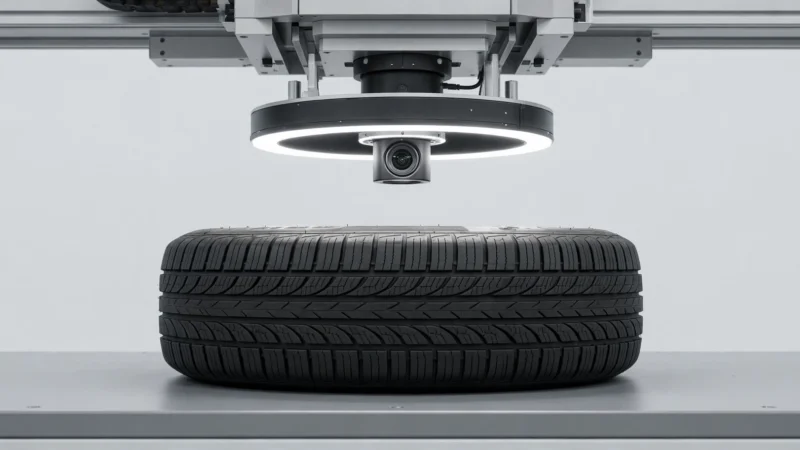
How Does Tyre Traceability Work?
An automated tyre traceability process generally combines image acquisition, code reading and data verification. The inspection sequence can be structured around the following stages:
The tyre is positioned so the required identification area can be captured under suitable imaging conditions. The system captures images of the relevant barcode, QR code, serial number, lot number or printed characters.
The captured images are analysed using barcode-reading or OCR technology to extract the required identification information. The result can then be checked against predefined data or expected product information, where required.
The system generates an identification or verification result according to configured criteria. Depending on the application, this result can be associated with a tyre, batch, inspection record or production record and communicated to the relevant production system.
Why Automate Tyre Traceability?
Manual recording and visual code checks can be difficult to maintain consistently across a busy manufacturing line. Automated identification provides a repeatable way to capture and assess tyre information.
- Consistent identification: Apply defined inspection rules to each tyre presented for inspection.
- Faster data capture: Read supported codes without relying entirely on manual entry.
- Code verification: Flag identification details that fail configured checks.
- Reduced recording errors: Help limit mistakes associated with transcribing tyre information.
- Production visibility: Make inspection outcomes available for connected tracking processes.
- Repeatable inspection: Use the same programmed criteria across applicable products and shifts.
What Does a Tyre Traceability System Inspect?
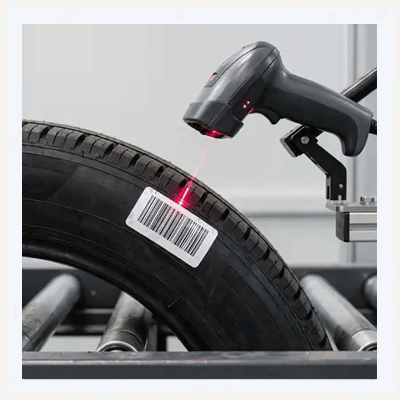
Tyre Barcode Inspection and Reading
Tyre barcode inspection checks whether a barcode can be located and decoded under the defined inspection conditions. The system can capture the encoded value and, where required, compare it with the expected product or production information.
Machine vision-based tyre barcode reading can be used at selected production checkpoints to help associate a tyre with its relevant record.
For applications requiring dedicated barcode and vision technology, Orchid Technology also provides barcode & vision solutions that include 1D and 2D barcode readers, vision sensors and smart cameras.
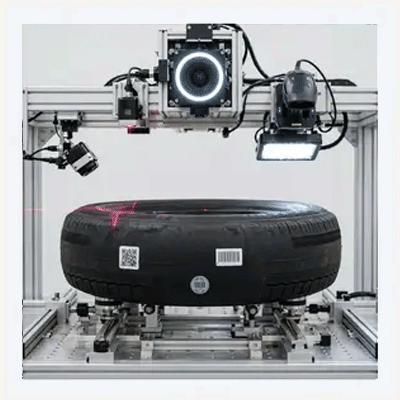
Machine Vision Tyre Traceability
Machine vision tyre traceability combines image acquisition, code recognition and inspection logic to identify tyres at selected production stages. It can be designed around barcode, QR code or OCR requirements rather than relying on a single identification method for every product.
The solution scope depends on code placement, surface conditions, production speed, available reference data and the required connection with existing equipment or software.
For tyre sidewall applications, tyre sidewall inspection can inspect OCR/OCV characters, DOT codes, tyre size, brand/model markings and Barcode/QR codes.
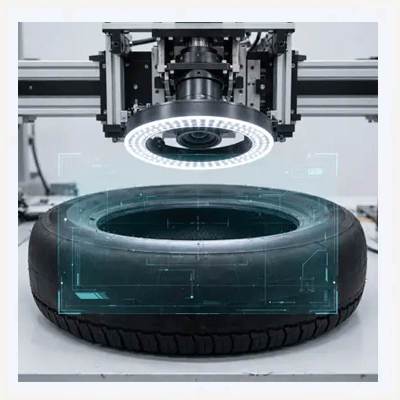
Tyre OCR Inspection
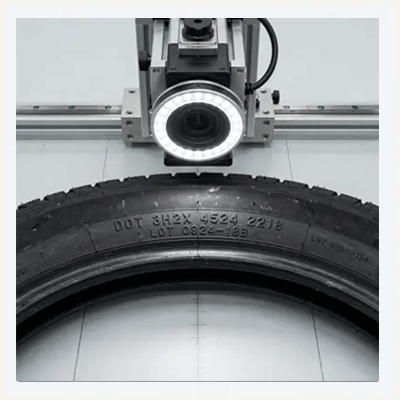
Some tyre identification details appear as printed or marked characters rather than machine-readable codes. Tyre OCR inspection uses image processing and character recognition to extract supported text from the designated area.
Depending on marking quality and application requirements, OCR can support tyre serial number identification, lot identification and the reading of other defined product information.
Tyre Serial Number and Lot Identification
A traceability solution may capture a unique serial number, a production lot reference or another identifier assigned by the manufacturer. The captured value can be checked for the required format and compared with available reference data.
This supports the association of a tyre with its relevant production information, provided the required data source and record-management process are available.
Tyre QR Code Inspection and Verification
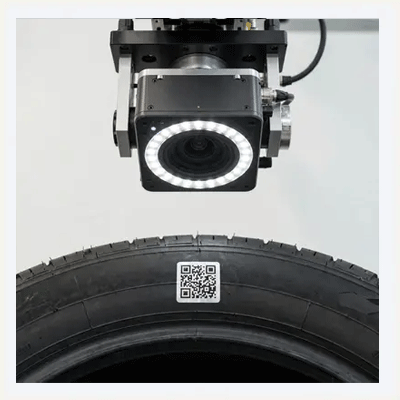
A QR code can store information used to identify a tyre or retrieve associated production data. Tyre QR code inspection checks whether the code is visible and readable by the configured vision system.
Decoded information can also be assessed against specified validation rules. This helps manufacturers identify codes that cannot be read or do not match the expected data.
Need Automated Tyre Traceability?
Automate tyre barcode inspection, barcode reading, QR code inspection, OCR identification, serial number identification and lot identification with a machine vision-based solution.
Share your tyre samples, identification requirements, production speed and traceability workflow with Orchid Technology to evaluate a suitable inspection and identification approach.
How Does Machine Vision Enable Tyre Traceability?
1.
Image Acquisition
2.
Barcode and QR Reading
3.
OCR Processing
4.
Data Verification
5.
Identification Area Detection
6.
Identification Result
7.
Traceability Record
8.
Production-System Communication
Key Capabilities of an Automated Tyre Traceability System
An automated tyre traceability system can be configured around the identification tasks and verification rules required by the manufacturing process.
| Capability | Application |
|---|---|
| Barcode reading | Capture data encoded in supported tyre barcodes. |
| QR code decoding | Read QR codes used for product identification. |
| OCR character recognition | Extract defined letters and numbers from tyre markings. |
| Serial number identification | Capture and verify tyre serial numbers. |
| Lot identification | Read production lot or batch references where provided. |
| Data validation | Compare recognised information with specified rules or reference data. |
| Inspection result output | Communicate pass, fail or reading status to connected systems where supported. |
| Production traceability support | Supply captured identification results to the configured record-keeping process. |
The actual capabilities available will depend on the selected inspection technology and the requirements of the application.
Applications of Tread Inspection Systems
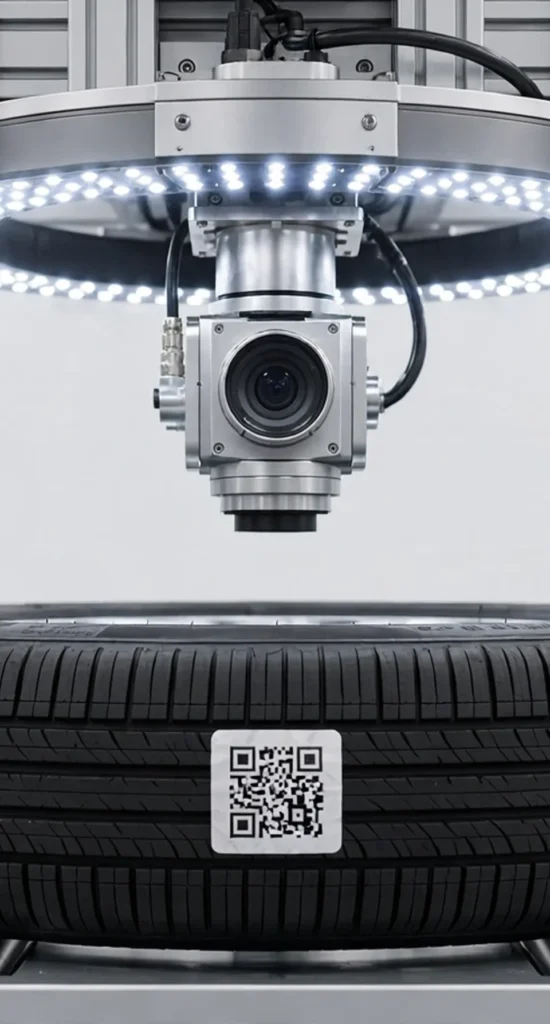
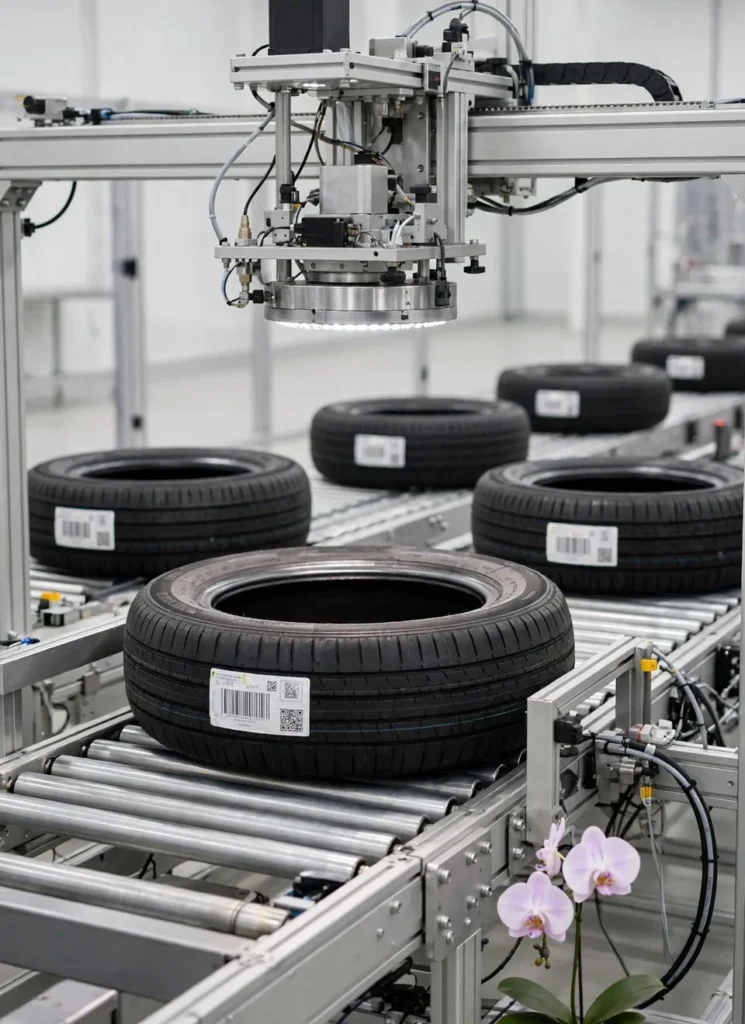
Machine vision-based tyre traceability can be used at suitable checkpoints throughout tyre manufacturing and handling operations. The appropriate application depends on the information carried by the tyre and the manufacturer’s tracking requirements.
Typical applications include:
- Tyre identification: Associate the tyre with its recognised product or variant information.
- Barcode inspection: Read and verify supported barcode data.
- QR code verification: Decode QR codes and check the resulting information.
- Serial number identification: Capture defined tyre serial numbers.
- Lot identification: Read batch or lot references where available.
- OCR-based inspection: Extract specified characters from tyre markings.
- Production record verification: Compare captured identifiers with available reference data.
- Inspection and dispatch checkpoints: Confirm required identification information before a tyre proceeds to the next configured process.
Benefits of Automated Tyre Traceability
Automated Tyre Identification
Automatically capture defined identification information from each tyre.
Barcode and QR Reading
Read machine-readable codes without requiring repetitive manual entry.
OCR-Based Identification
Automatically read serial numbers, lot numbers and other defined characters.
Reduced Manual Data Entry
Reduce repetitive operator-based reading and recording.
Consistent Identification
Apply predefined reading and verification criteria consistently.
Faster Production Identification
Perform identification inline as tyres move through the production process.
Improved Data Accuracy
Reduce errors associated with manual transcription.
Production Traceability
Associate tyre identification with relevant manufacturing or inspection information.
Production-System Integration
Communicate identification results with relevant automation, MES, database or traceability systems where required.
Tyre Traceability Solutions with Orchid Technology
Orchid Technology supports industrial businesses with machine vision and industrial automation solutions for manufacturing applications. For tyre production, vision-based identification can be configured to address barcode reading, QR code inspection, OCR and defined data-verification tasks.
Depending on the project requirements, Orchid Technology can help with:
- Assessing tyre marking and code-reading requirements.
- Identifying suitable industrial vision components.
- Configuring barcode, QR code or OCR inspection tasks.
- Defining identification and data-validation criteria.
- Planning communication with relevant production equipment.
- Evaluating the inspection requirements for different tyre variants.
The proposed configuration depends on the marking conditions, required reading performance, production environment and integration scope. Application assessment helps determine the appropriate combination of cameras, optics, lighting, software and control components.
Explore our machine vision solutions and Banner Barcode and Vision Products to learn more about technologies that may be relevant to your application.
Frequently asked questions
What is a tyre traceability system?
How does automated tyre traceability work?
What is tyre barcode inspection?
Can machine vision read QR codes on tyres?
What is tyre OCR inspection?
Can a system identify tyre serial numbers?
A system can capture tyre serial numbers when the markings are accessible and readable by the selected vision configuration. Recognition performance depends on character appearance, marking quality and inspection conditions.
What is tyre lot identification?
Tyre lot identification involves reading a batch or lot reference associated with a tyre. The captured identifier can help link the product to production information when corresponding records are available.