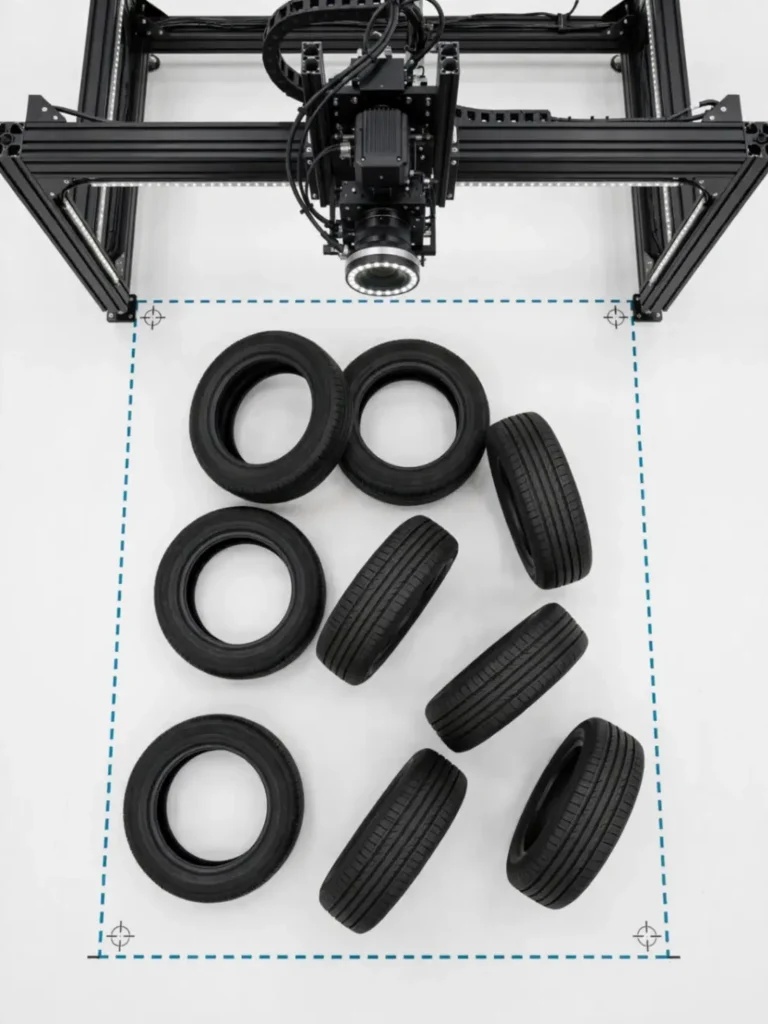
Tyre Counting, Component Counting & Kit Verification System
Automated Counting and Quantity Verification for Tyre Manufacturing
Accurate counting is important in tyre manufacturing, assembly and material handling, where the required number of tyres or components must be available before the next production stage. Manual counting can become difficult when multiple items move through a production area or when quantities must be checked repeatedly.
A tyre counting system uses machine vision to detect individual tyres within a defined inspection area and calculate the quantity present. The result can be compared with a predefined target to identify shortages, additional tyres or counting mismatches.
The same approach can be adapted for tyre component counting and kit verification. Depending on the application, the system can check component presence, count selected parts and confirm whether a prepared kit contains the required items. Orchid Technology provides machine vision solutions for industrial inspection, counting and verification applications.
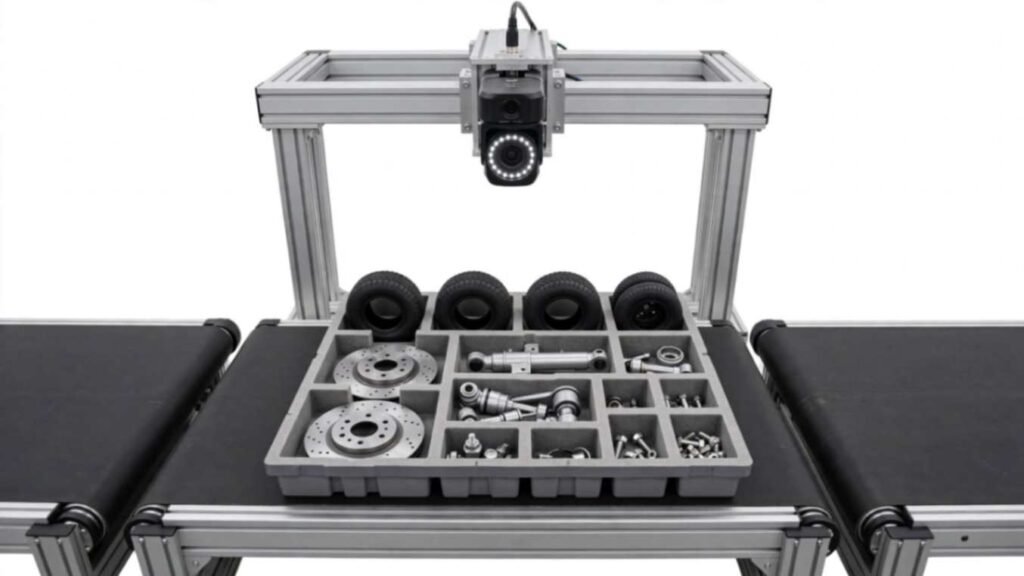
How Does Automated Tyre Counting Work?
An automated tyre counting process begins when tyres enter a designated inspection area, such as a conveyor, production station or staging location. An industrial camera captures the scene under suitable lighting conditions so the system can identify the individual tyres or components that need to be counted.
The captured image is processed using configured machine vision software. The system detects the relevant objects, distinguishes individual items where the application permits, and calculates the total quantity. For component counting and kit verification, the inspection can also be configured to recognise selected component types and assess whether the expected items are present.
The detected quantity is then compared with a predefined target or kit requirement. The system generates a counting or verification result according to the configured rules. Where compatible interfaces are available, the result can be communicated to production equipment or other connected systems.
Why Automate Tyre Counting?
Manual counting can require repeated operator attention, particularly when production volumes are high or several components must be checked together. Automated counting provides a repeatable method for checking quantities against defined requirements.
- Consistent quantity checks: Apply the same counting rules to each inspection cycle.
- Reduced manual effort: Limit repetitive counting and visual checking tasks.
- Mismatch detection: Identify quantities that fall below or exceed the expected value.
- Component verification: Check the number of required parts before assembly.
- Kit completeness: Confirm that predefined component quantities are available.
- Production visibility: Make counting results available to connected systems where required.
What Does a Tyre Counting System Check?
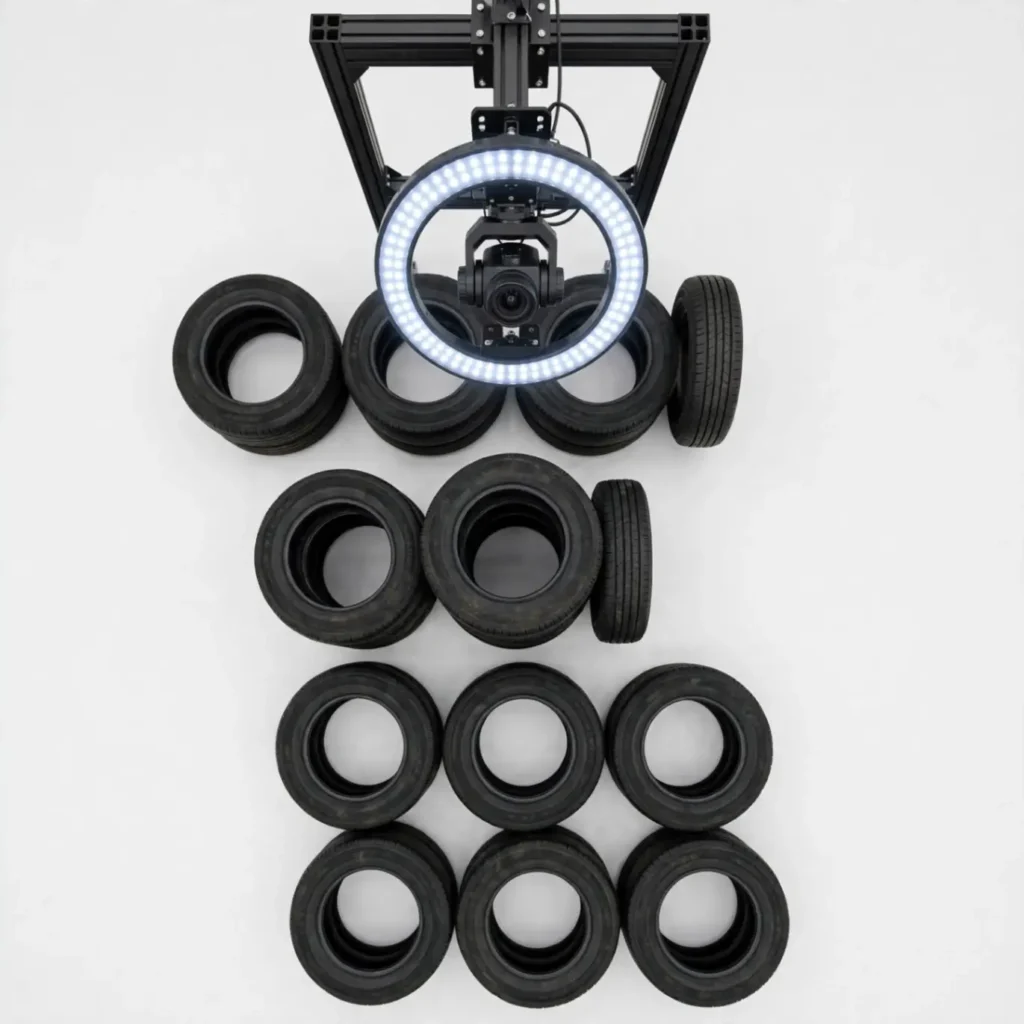
Tyre Counting and Quantity Verification
A tyre counting system detects and counts tyres within a defined inspection area. It can be used where manufacturers need to check the number of tyres moving through a production line, arranged in a staging area or prepared for a subsequent operation.
The detected quantity can be compared with a required value to determine whether the expected number of tyres is present. Depending on the application, checks may include:
- Individual tyre detection and counting
- Verification of predefined tyre quantities
- Identification of missing or additional tyres
- Batch and staging-area quantity checks
- Generation of configured counting results
The counting method must account for tyre spacing, overlap, orientation and the arrangement of tyres within the camera’s field of view.
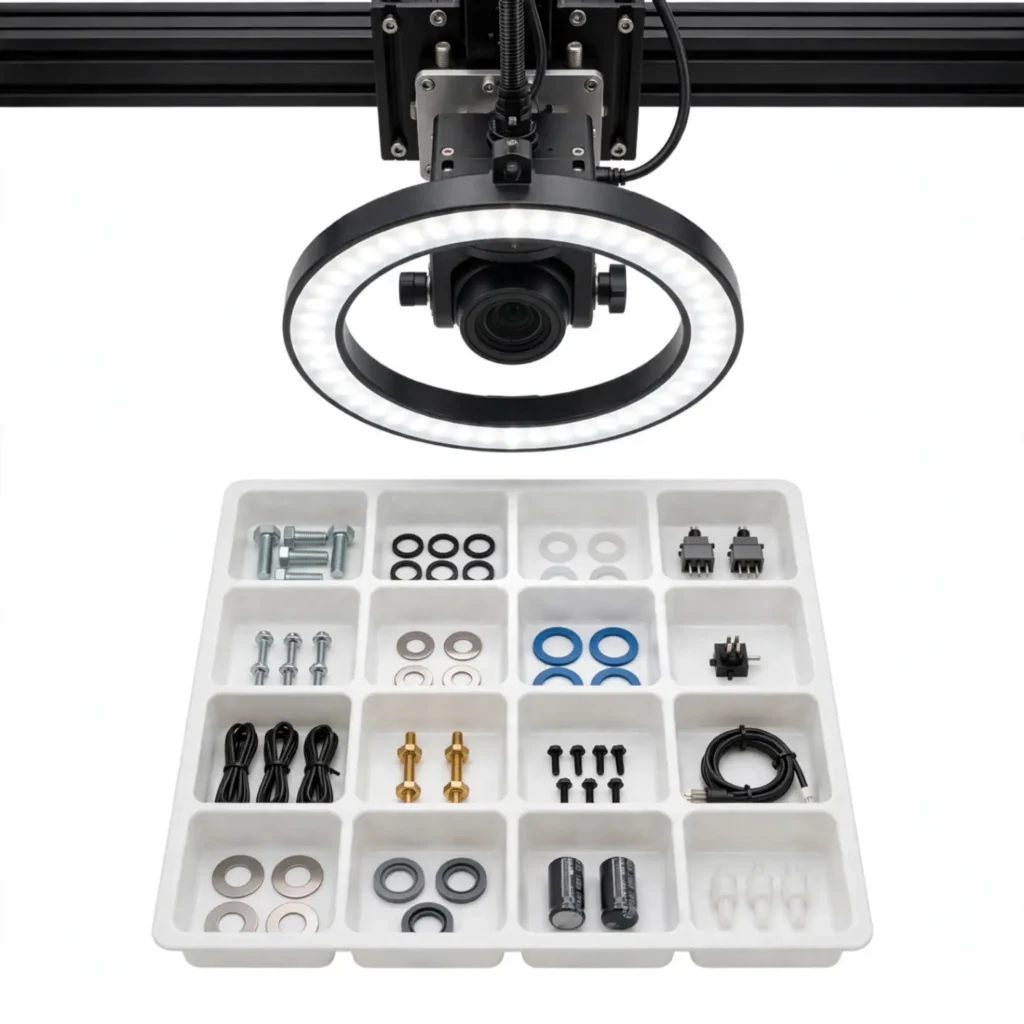
Kit Verification and Quantity Inspection
A kit verification system checks whether a predefined set of components has been prepared with the required items and quantities. This is useful when parts are collected together before being supplied to an assembly station or another production operation.
The system examines the kit area, detects the configured components and compares the results with the expected kit specification. Depending on the application, verification may include:
- Presence of required components
- Quantity of each defined component
- Identification of selected component types
- Detection of missing or additional parts
- Confirmation of kit completeness
The verification rules can be adapted to the kit configuration and the inspection conditions. This provides an additional check before an incomplete or incorrectly prepared kit proceeds to the next process.

Machine Vision Component Counting
Tyre component counting uses image processing to detect and count defined parts associated with tyre manufacturing or assembly. The application can focus on a single component type or be configured to distinguish between selected categories when their visual characteristics allow reliable differentiation.
Depending on the inspection requirements, the system may count rubber parts, assembly components, small parts or other defined items. The result can be compared with the quantity specified for the relevant process.
For applications that also require component identification or presence checks, counting can form part of a broader machine vision inspection solution.
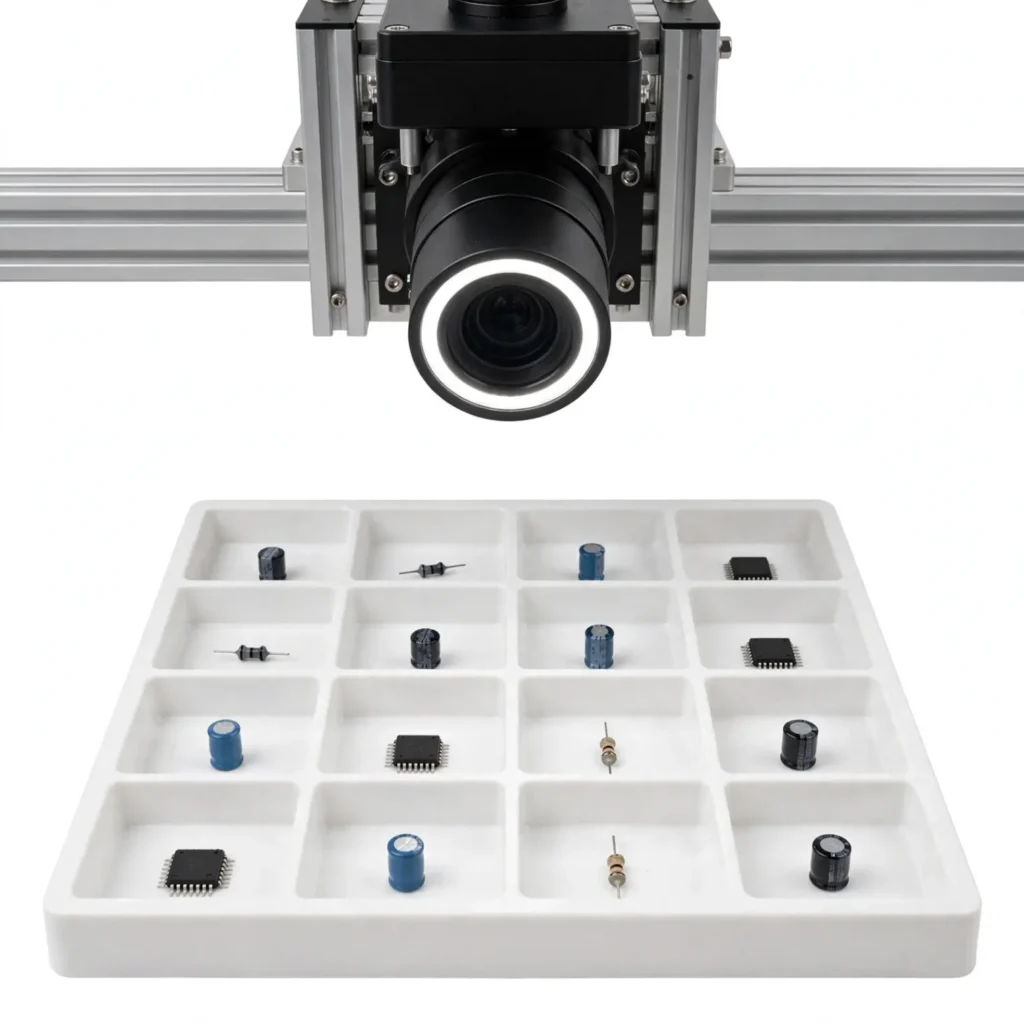
Component Presence Verification
Counting can be combined with component presence verification to determine whether the required parts are available before an assembly or processing operation begins.
A machine vision system examines the defined inspection area and checks for expected components. Where the application supports it, the system can assess component presence, quantity, location and selected component types.
This can help identify an incomplete assembly or a shortage of required parts before the workpiece moves to the next stage. The inspection criteria should be established around the component arrangement and the requirements of the specific manufacturing process.
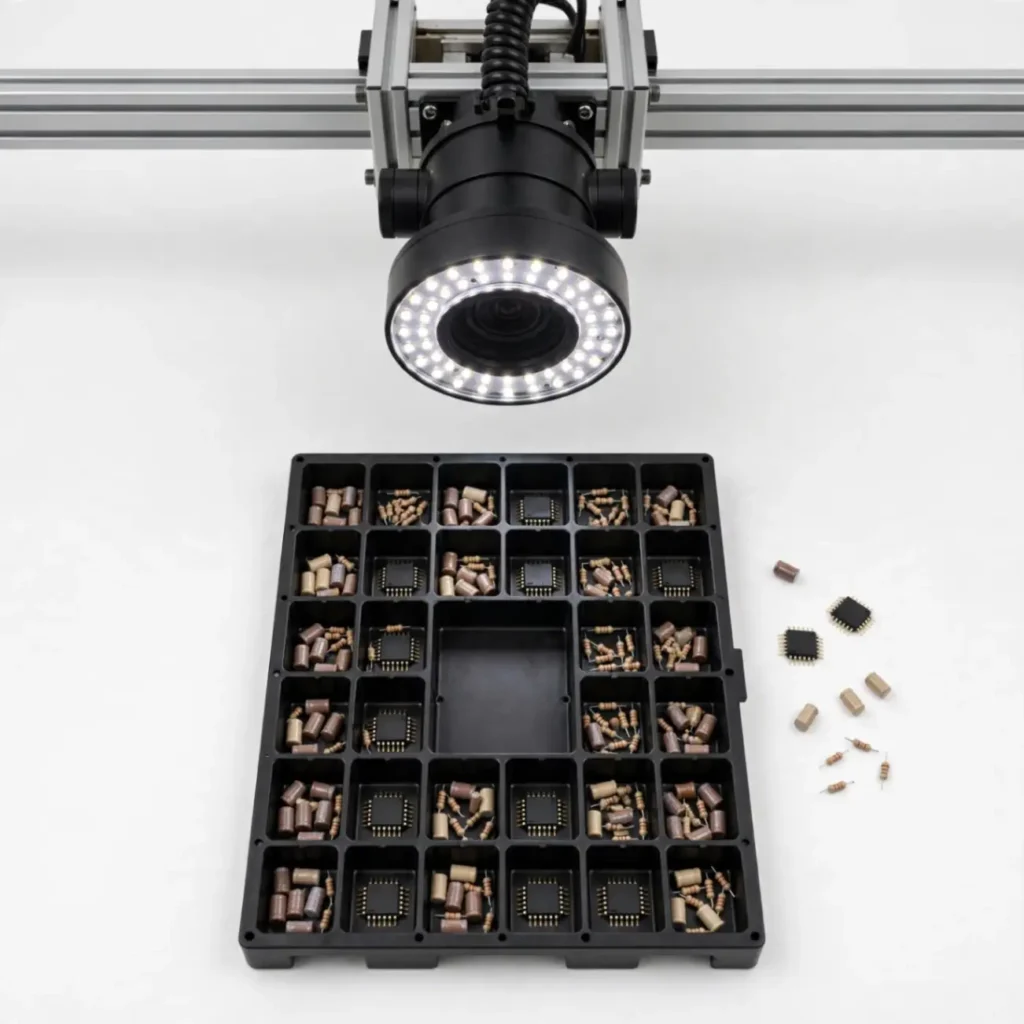
Missing and Extra Component Detection
A quantity-inspection system can identify differences between the observed component count and the required quantity. If fewer items are detected than expected, the result can indicate a potential shortage. If additional items are detected, the system can flag a quantity mismatch.
These checks can support assembly preparation and kit verification where the correct number of parts is important. The reliability of missing- or extra-item detection depends on factors such as object overlap, component spacing, visibility and the configured inspection logic.
Need Automated Tyre Counting or Kit Verification?
Orchid Technology can help assess machine vision requirements for tyre counting, component quantity checks and kit verification.
Share your tyre or component samples, required quantities, inspection-area layout and production conditions to evaluate a suitable counting and verification approach.
How Does Machine Vision Enable Tyre Counting?
1.
Image Acquisition
2.
Object Detection
3.
Object Separation
4.
Component Identification
5.
Quantity Calculation
6.
Quantity Comparison
7.
Verification Result
8.
Production-System Communication
Key Capabilities of an Automated Tyre Counting System
Machine vision-based counting and quantity verification for
tyre manufacturing, component handling and assembly operations.
| Capability | Application |
|---|---|
| Tyre counting | Detect and calculate the number of tyres in a defined area. |
| Tyre quantity verification | Compare the detected tyre count with the required quantity. |
| Component counting | Count defined parts used in manufacturing or assembly. |
| Component presence detection | Check whether required components are present. |
| Component type differentiation | Distinguish selected component categories where supported. |
| Kit quantity verification | Compare kit contents with the specified quantities. |
| Missing-item detection | Flag required tyres or components that are not detected. |
| Extra-item detection | Identify counts that exceed the configured requirement. |
| Pass/fail output | Generate a result based on defined acceptance criteria. |
| Automation integration | Communicate results to compatible production or control systems. |
The available functions depend on object visibility, camera placement, lighting, production speed and the required inspection logic.
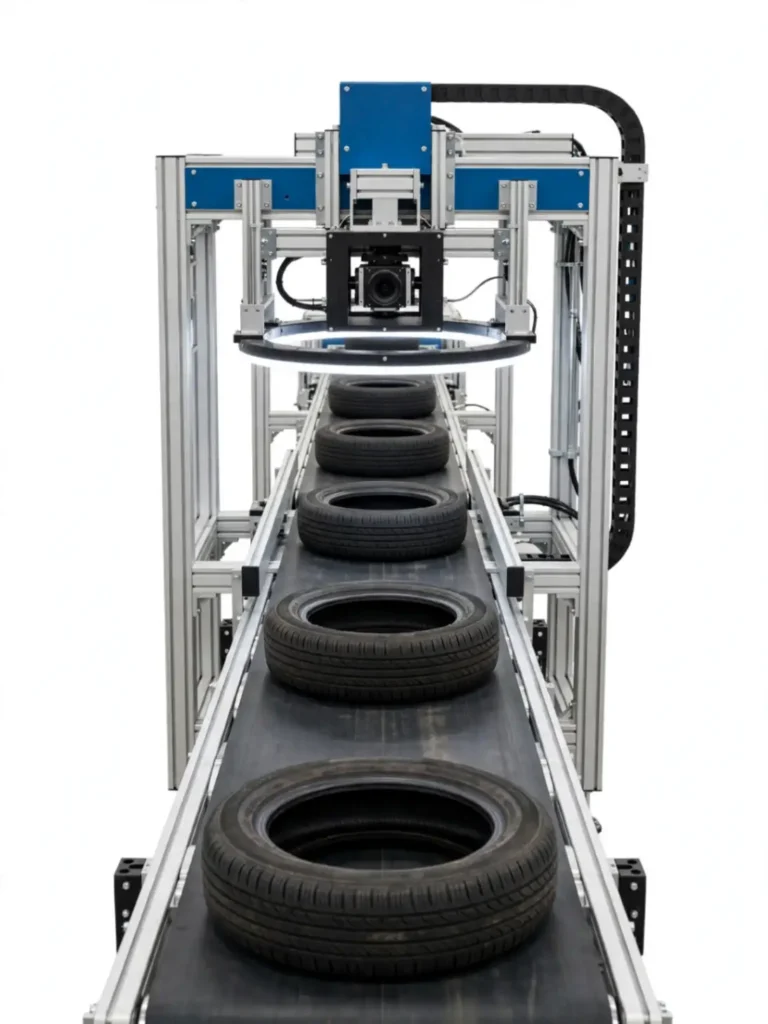
Applications of Tyre Counting and Kit Verification Systems
Machine vision-based counting can be applied at suitable checkpoints across tyre manufacturing, assembly and material handling. The application depends on what needs to be counted and when the quantity must be confirmed.
Typical applications include:
Tyre production counting: Count tyres presented at a defined production checkpoint.
Tyre quantity verification: Check that the required number of tyres is available for the next operation.
Batch counting: Verify quantities within a defined batch or staging area.
Component counting: Count selected parts used during tyre manufacturing or assembly.
Kit verification: Confirm that a prepared kit contains the specified components and quantities.
Missing component detection: Identify a shortage of required parts within an assembly or kit.
Extra component detection: Flag additional parts that exceed the required quantity.
Assembly quantity checks: Verify defined component quantities before a downstream process.
Packing and dispatch checks: Count tyres or items at designated handling checkpoints where the setup supports reliable detection.
Counting can also be combined with other machine vision applications when the process requires additional checks for component presence, identification or inspection.
Benefits of Automated Tyre Counting
Automated Quantity Detection
Count defined tyres or components using a configured machine vision inspection process.
Consistent Counting Criteria
Apply the same programmed counting rules to each inspection cycle.
Reduced Manual Counting
Limit repetitive manual checks during production, assembly preparation or material handling.
Quantity Mismatch Detection
Identify differences between the detected count and the required quantity.
Missing Component Identification
Flag absent components where the inspection setup can reliably detect the expected items.
Kit Completeness Verification
Check whether a prepared kit meets the defined component and quantity requirements.
Faster Inspection Workflow
Perform counting and verification at selected production checkpoints without relying entirely on manual counting.
Assembly Error Prevention
Help identify quantity-related issues before an assembly or kit proceeds to the next operation.
Production-System Integration
Make counting results available to compatible control or production systems where required.
The actual benefits and counting performance depend on the application design, object arrangement, imaging conditions and system configuration.
Tyre Counting Solutions with Orchid Technology
- Reviewing tyre, component or kit samples
- Defining the required counting and verification criteria
- Evaluating camera, lens and lighting requirements
- Assessing object spacing, overlap and inspection-area layout
- Selecting suitable image-processing methods
- Defining quantity comparison and pass/fail rules
- Reviewing communication with existing production equipment